
Industrial dust collectors.
Built around your process.
Control process dust with a collection system that fits your material, machinery and production duty. Explore NAPCEN cartridge, baghouse, cyclone and local extraction options.
Request an engineered quotation
Capture at the source
Hoods and machine connections
Choose by dust behaviour
Media and separation technology
Design the complete system
Airflow, resistance and discharge
Plan for maintenance
Access, cleaning and replacements
Trusted By Industry Leaders
A few of the brands we've grown alongside
































One conversation.
The complete
extraction requirement.
NAPCEN designs, manufactures and supplies industrial air pollution control equipment from Puducherry, including dust collectors, blowers and ducting solutions.
Start with the process
Discuss the material, production task and capture points with a manufacturer whose equipment range spans dust collection and industrial extraction. The selected collector should fit the actual duty.
Connect the equipment
Bring collector, fan, ducting and discharge requirements into the same specification. Define supply boundaries clearly so procurement and production teams can assess the proposed arrangement.
Make support explicit
Discuss drawings, installation coordination, commissioning and ongoing support before ordering. Confirm the services and documentation included for your site rather than relying on assumptions.
.png)
Dust collection is
more than a filter and a fan.
An industrial dust collector separates particulate from an extracted air stream. Its performance depends on the entire path: how dust is captured, transported, separated and removed from the process.
Better source control
Capture airborne material near its release point rather than relying on general room ventilation.
Practical material handling
Plan how collected dust will be discharged, contained and removed during operation.
Dust becomes airborne during cutting, abrasion, transfer and handling. A collection system provides a deliberate extraction route instead of allowing that material to disperse across the workshop or production area.
Collection technology may retain dust on a filter, separate heavier particles through rotation or transfer suitable particles into water. The collected solids or sludge then need a defined removal route.
Capture (Hood)
(Separation)
Fan (Exhaust)
Choose the technology.
Then refine the system.
Compare dust collector types by their collection method and intended duty. Use these options to begin an engineering conversation.
Cartridge dust collector
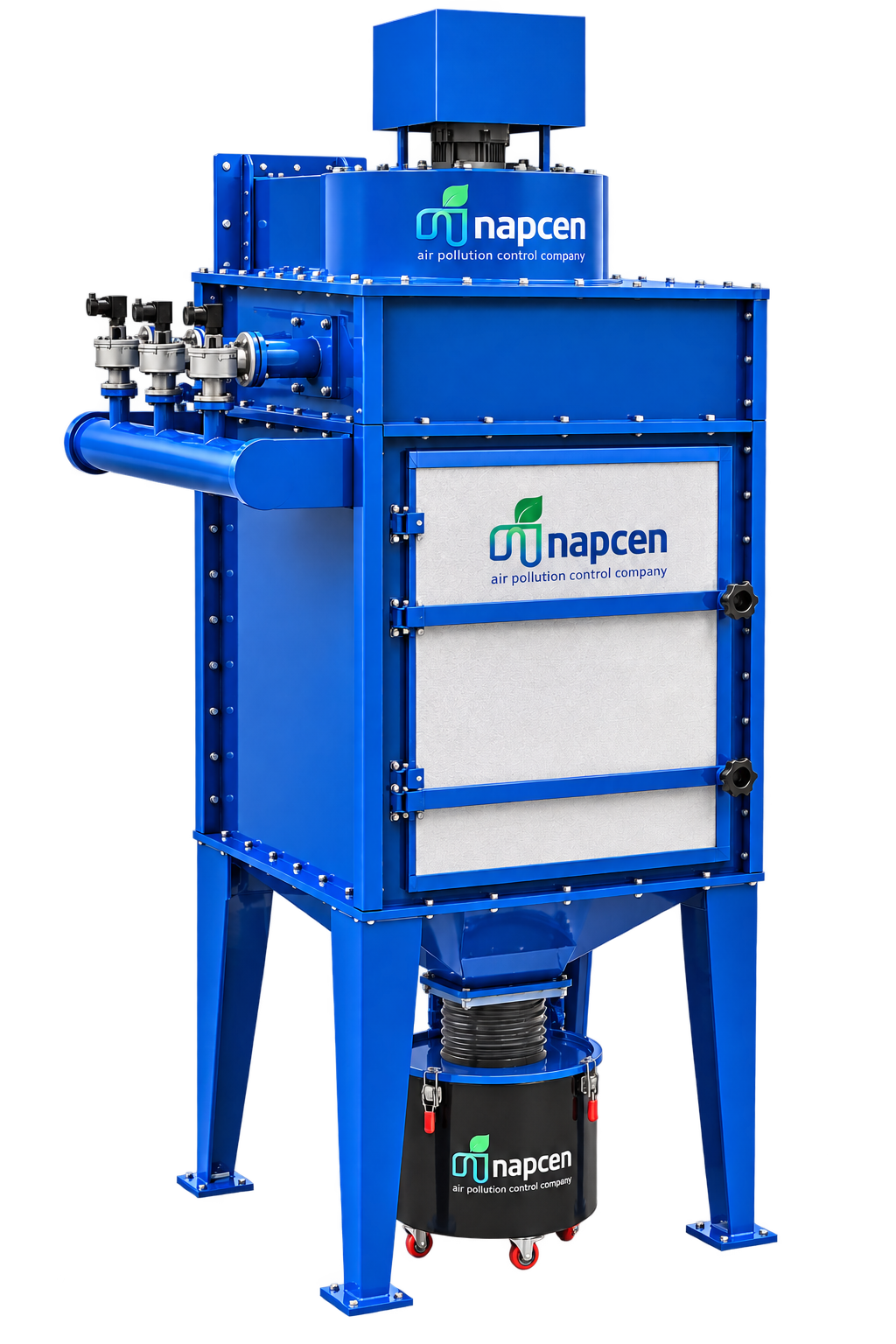
Pleated filter cartridges provide a large filtration surface within a compact housing. A cartridge dust collector is an option for compatible fine, dry particulate where efficient use of floor space and accessible filter replacement matter.
Typical fit
Grinding, laser cutting, powder handling and selected fume duties.
Selection check
Review dust loading, moisture, filter media, cleaning access and ignition sources.
Pulse jet baghouse dust collector
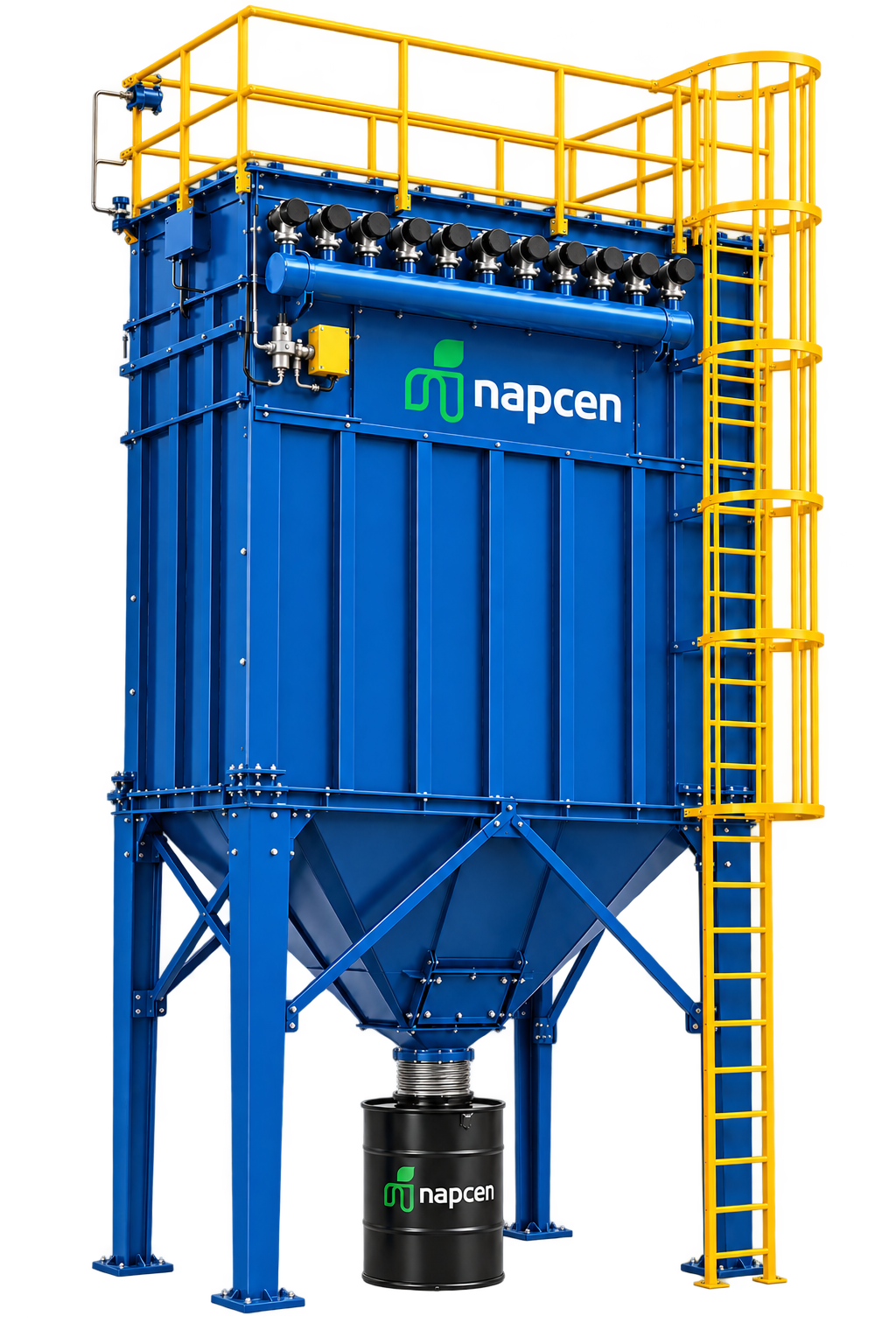
A baghouse dust collector separates particles on fabric filter bags. Short compressed-air pulses release accumulated dust into the hopper. Filter material and filtration area are selected around the gas conditions and process duty.
Typical fit
Material handling, foundries, mineral processing and larger extraction systems.
Selection check
Define temperature, abrasion, filtration velocity, hopper discharge and utility requirements.
Cyclone dust collector
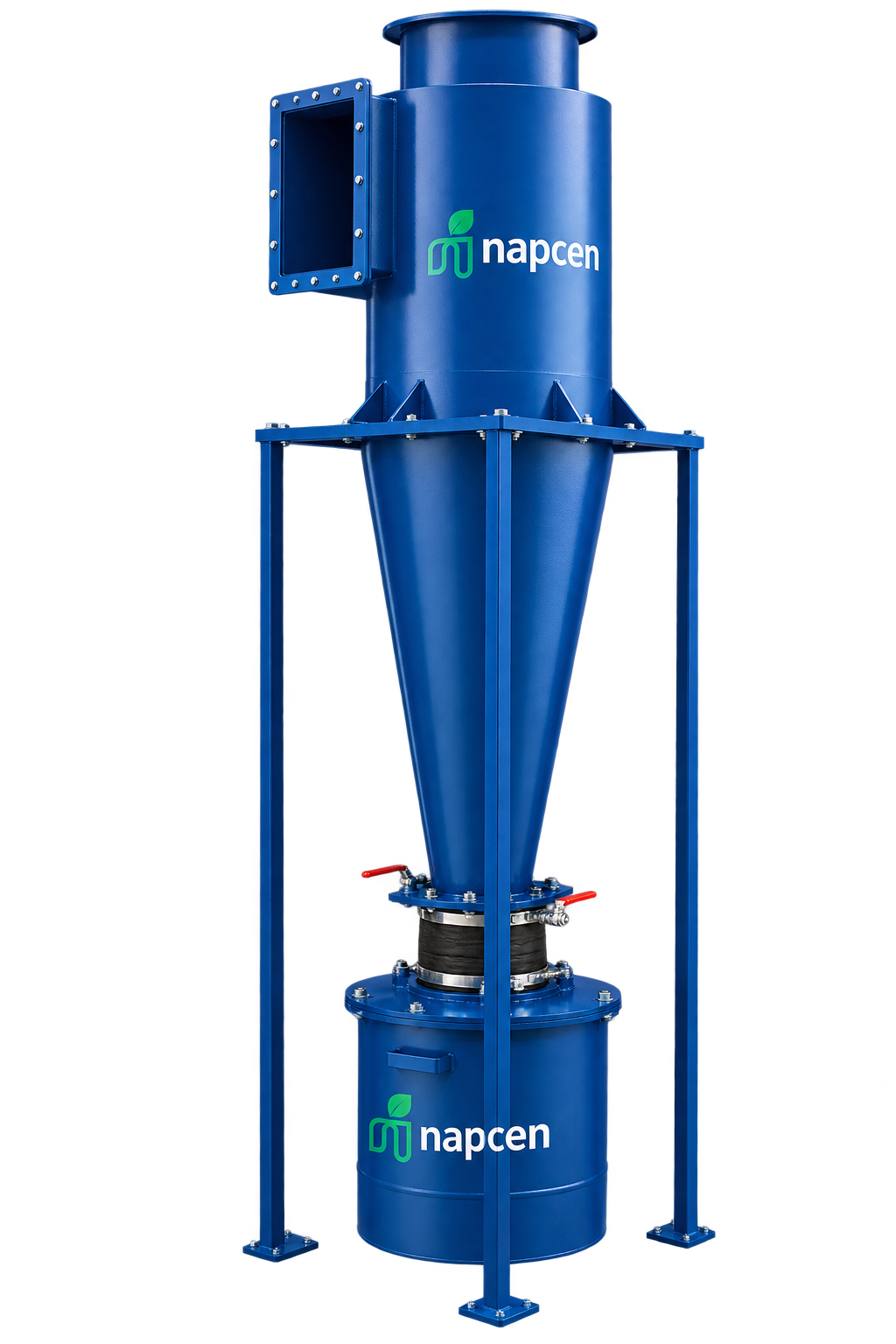
A cyclone dust collector uses a rotating air stream to separate heavier particles by centrifugal action. It can recover coarse material or reduce the solids load reaching a downstream filter. Fine-dust control may require a second collection stage.
Typical fit
Wood chips, coarse process dust and upstream product recovery.
Selection check
Check particle size and density, pressure loss and the need for final filtration.
Portable dust collector
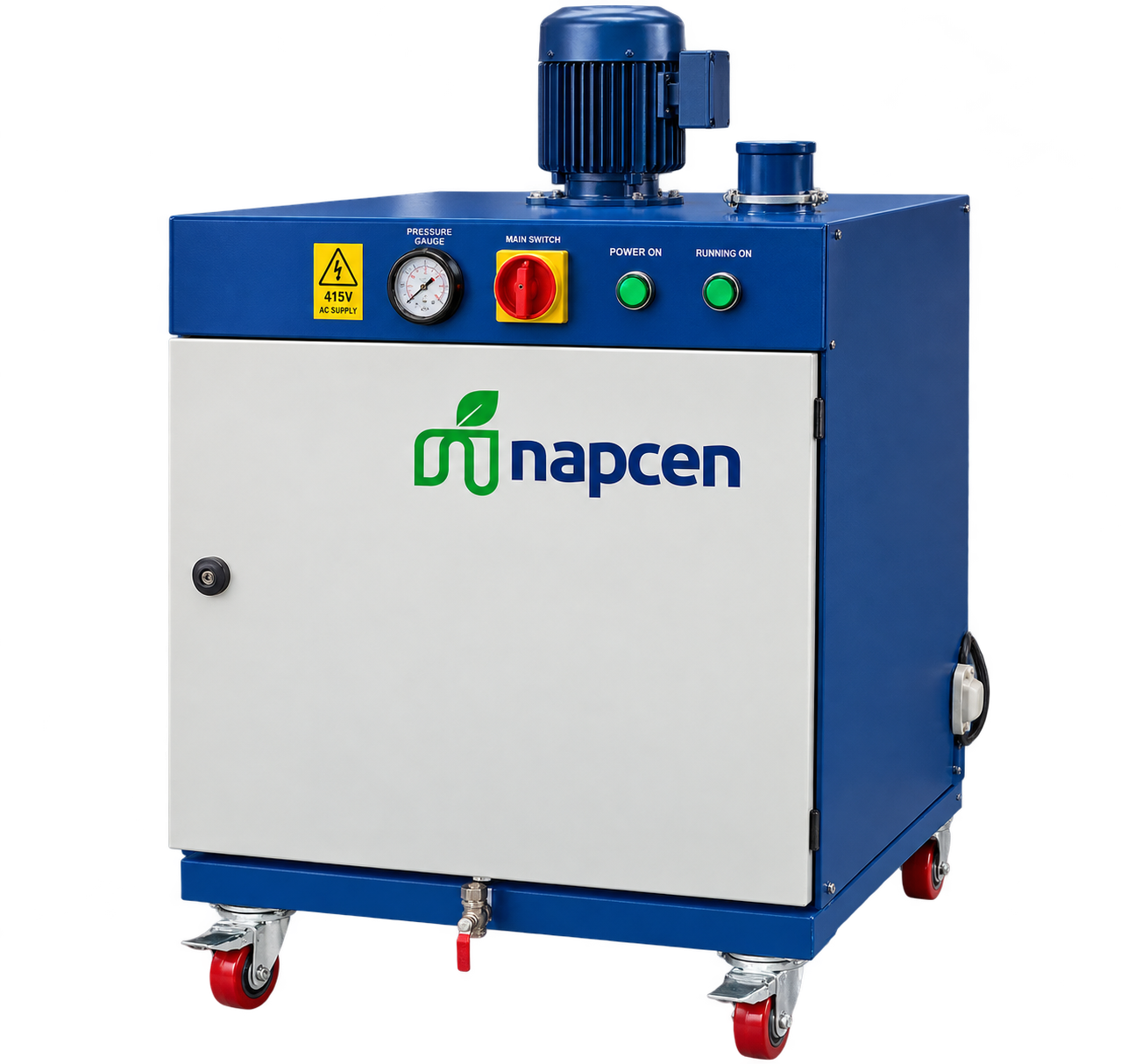
A portable dust collector brings extraction closer to a changing work location. The pickup arrangement, hose length and available airflow determine its useful reach. Mobility should complement a well-positioned hood and a suitable collection method.
Typical fit
Intermittent workshop tasks and localized dust-generating processes.
Selection check
Review material compatibility, hose losses, electrical supply and dust-bin handling.
Two-stage dust collector
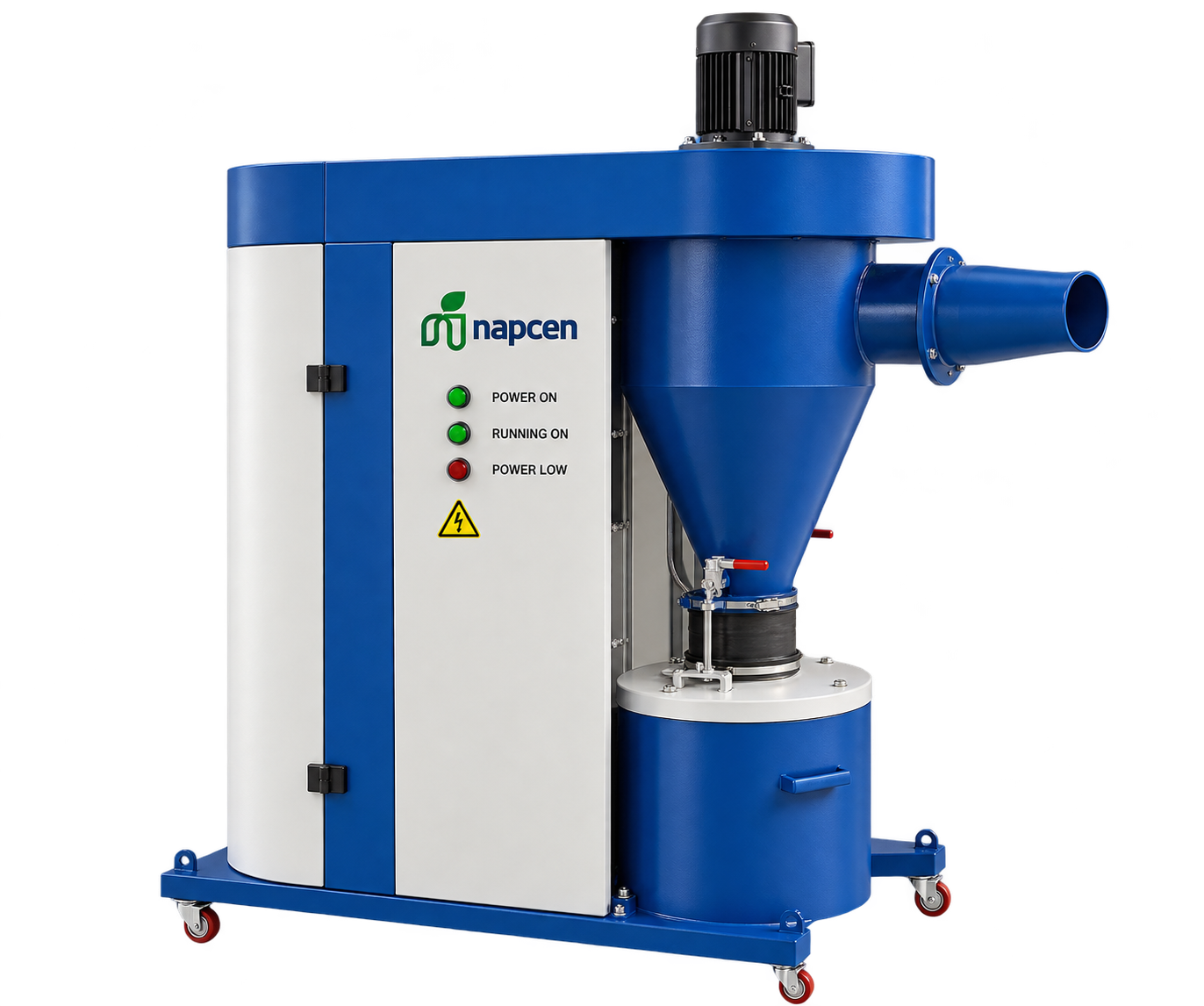
A two-stage dust collection system combines upstream separation with downstream filtration. Coarse material is removed first, while compatible finer particles reach a filter. The arrangement can reduce the material load on the final collection stage.
Typical fit
Mixed chips and fine dust, woodworking and selected recovery applications.
Selection check
Match both stages to the particle distribution; define collected-material handling.
Wet dust collector
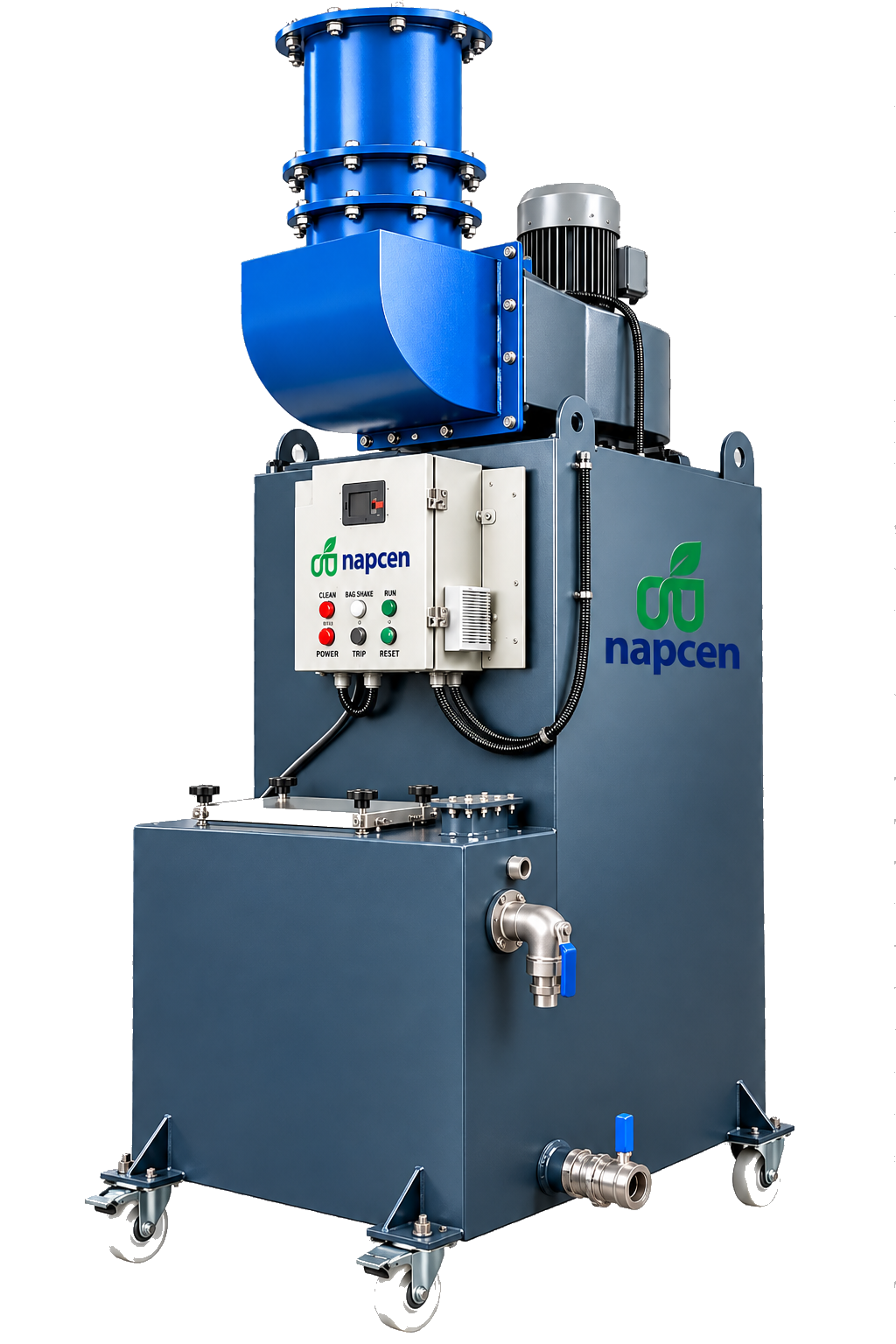
A wet dust collector transfers suitable particles into water rather than retaining them on dry filter media. Its design must account for gas–liquid contact, droplet separation and collected-sludge management. Material compatibility is central to selection.
Typical fit
Selected particulate duties where water-based collection is appropriate.
Selection check
Assess water reactivity, gas generation, corrosion, make-up water and sludge disposal.
Images are supplied equipment visualizations; schematic illustrations explain collection methods. Neither represents a verified installation or a model specification. Final equipment configuration, performance and scope depend on the agreed design basis.
Different dust.
Different design decisions.
Use this comparison to shortlist a collection approach. Suitability still requires a review of your process conditions.
Start with what creates the dust.
Industrial dust extraction should fit the process, operator access and machinery layout. Explore the factors that matter in common dust-generating applications.
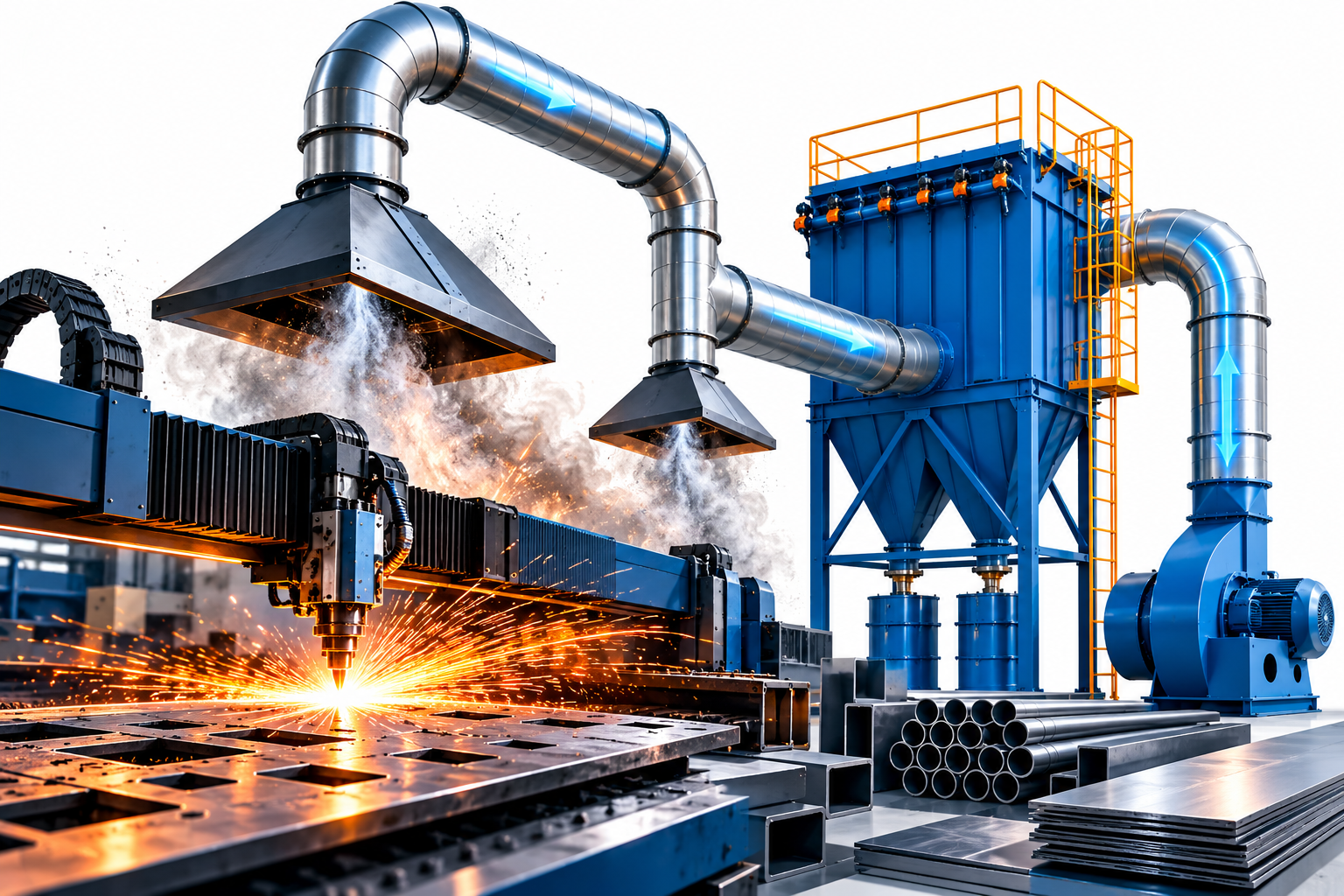
Engineered for Heavy Duty & Precision Capture
Unsure which collector you need?
Describe the operation and choose “Recommend a system” in your enquiry. Our team evaluates your airflow, material and site requirements.
Grinding & deburring
Metal dust at the source.
A grinding dust collection system must address the direction of particle release, tool movement and workpiece access. Fine particles may remain airborne while heavier fragments settle nearby. Capture hoods or an extraction bench need to fit the actual operation.
Base metal, abrasive, spark generation, workpiece size and operating hours.
Consider cartridge or bag filtration for suitable dry dust; assess ignition control separately.
Laser & plasma cutting
Extraction that follows the cutting zone.
Thermal cutting generates fine particulate and hot emissions. The cutting table, active extraction zones and material thickness influence the required airflow. Ductwork and collection equipment should be reviewed together with the machine connection.
Cutting process, material/coatings, table dimensions, simultaneous zones and production duty.
Review fine-particle filtration, thermal conditions, sparks and machine integration.
Woodworking & sanding
Manage chips and fine sanding dust.
Sawing, routing and sanding produce different mixtures of chips, fibres and fine dust. A woodworking dust collection system should balance machine connection requirements with material transport and a practical collection-bin or discharge arrangement.
Machine list, wood/coatings, simultaneous use, duct routes and dust handling.
Evaluate cyclone pre-separation and final filtration; assess combustible-dust properties.
Blasting & foundry
Built around abrasive process dust.
Blasting, fettling and sand handling can impose abrasive or high-loading duties. The extraction system needs to contain the process and keep recovered material moving toward a discharge point. Inlet protection and maintenance access deserve early attention.
Abrasive type, sand or metal content, loading, temperature and recovery requirements.
Discuss baghouse or cartridge selection, pre-separation and wear-resistant arrangements.
Powder & bag handling
Contain dust at transfer points.
Mixing, bag opening, filling and conveyor transfers release dust at different locations. Capture design should control airborne material without unnecessarily pulling valuable product out of the process. Hygiene and cross-contamination requirements may influence construction.
Powder identity, handling rate, toxicity, moisture, hygiene and process connections.
Review suitable filtration, discharge, containment and product-recovery requirements.
Centralized extraction
One system. Multiple pickup points.
A centralized dust collection system connects several machines or capture points to a common collector. Branch balancing, simultaneous operation and minimum material transport conditions determine whether each pickup receives the airflow it needs.
Pickup list, machine schedules, duct lengths, space and future expansion.
Evaluate total resistance, fan duty, branch controls and servicing arrangements.
From the source.
Through the system.
A dry filtration system uses airflow to move compatible particulate from its release point to a controlled collection and discharge arrangement.
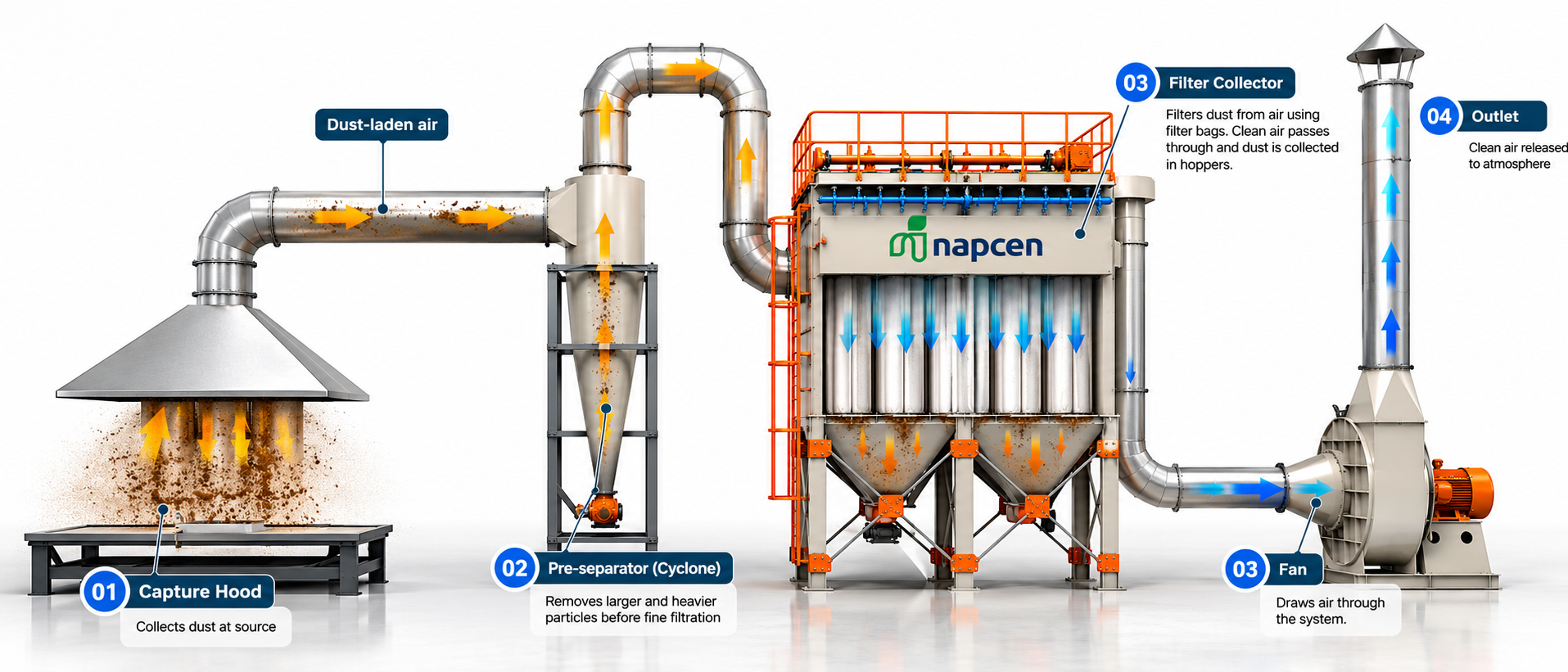
Collect at release.
A hood or machine connection draws dust-laden air away from the process. Hood position and airflow must work with particle movement and cross-drafts.
Match the mechanism.
Suitable filter media retains particulate. Alternative arrangements use centrifugal separation or water contact, depending on the material and duty.
Manage the solids.
The specified cleaning method releases accumulated dust. Bins, valves or conveyors remove material without disrupting the intended operating conditions.
Check the whole path.
Review airflow, system resistance, filter condition and outlet requirements. Filtration efficiency alone does not establish capture at the workstation.
The schematic shows one dry collection arrangement. Actual fan location, cleaning method, discharge and air outlet configuration vary by application.
Media area and
footprint comparison.
Calculate required filter media area (A = Q / V) and evaluate estimated equipment footprint between Cartridge and Baghouse systems for your airflow and dust type.
Dust Collector Media & Footprint Calculator
Filter Area: A = Q / V | Cartridge vs. Baghouse Comparative Sizing
Footprint Advantage: Cartridge saves ~51% floor space
Due to pleated media geometry (~45 m² media per m² footprint), cartridge collectors require significantly less plant space than vertical tubular baghouses for fine, dry dust.
The collector is
one part of the
solution.
Effective industrial dust collection connects the process to a suitable filtration and handling arrangement. Discuss the complete equipment boundary before comparing quotations.
Cleaner Workplace
Reduce airborne dust and improve air quality.
Safer Operations
Control dust at source for a healthier environment.
Higher Productivity
Maintain consistent airflow and reliable performance.
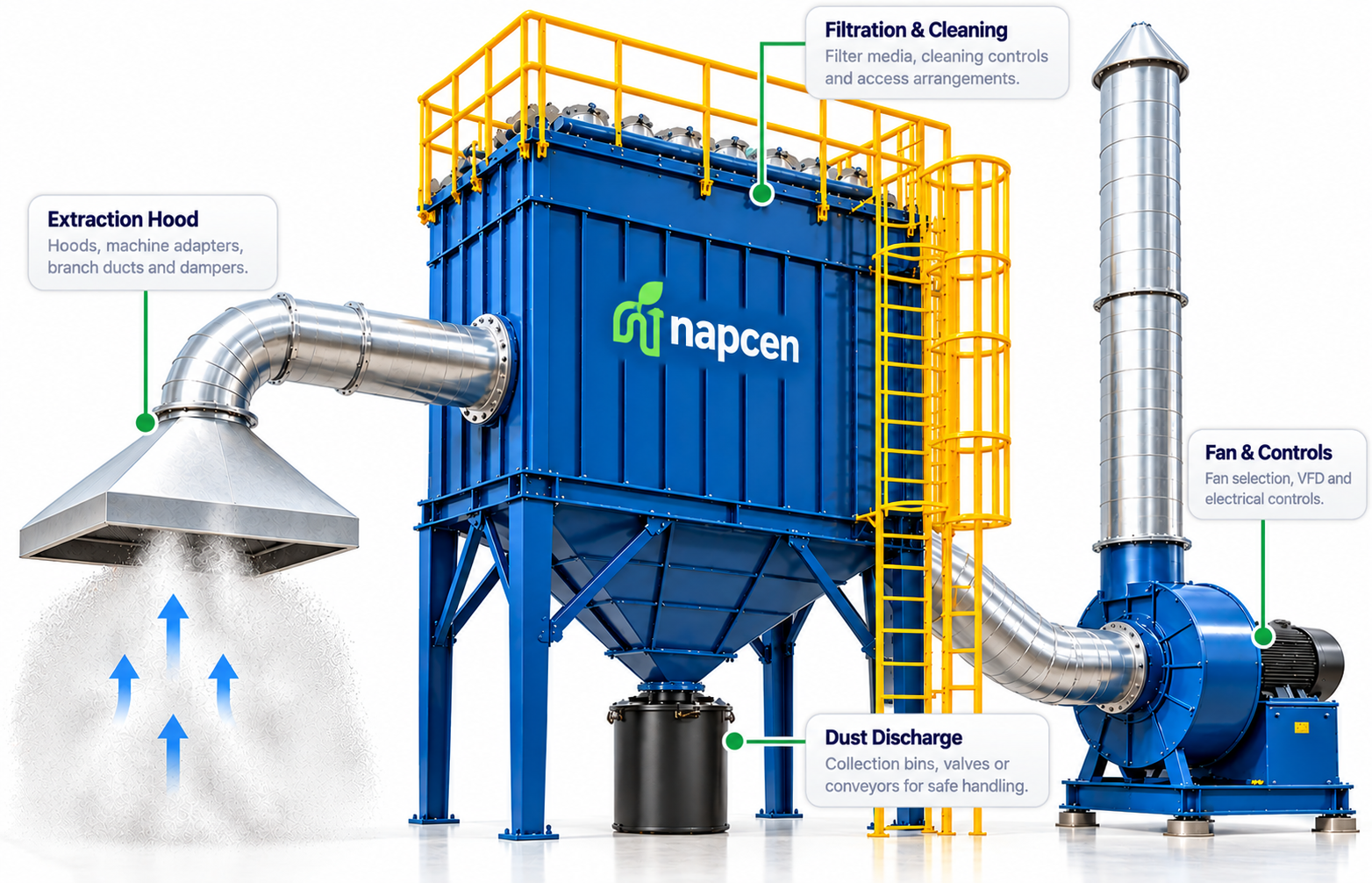
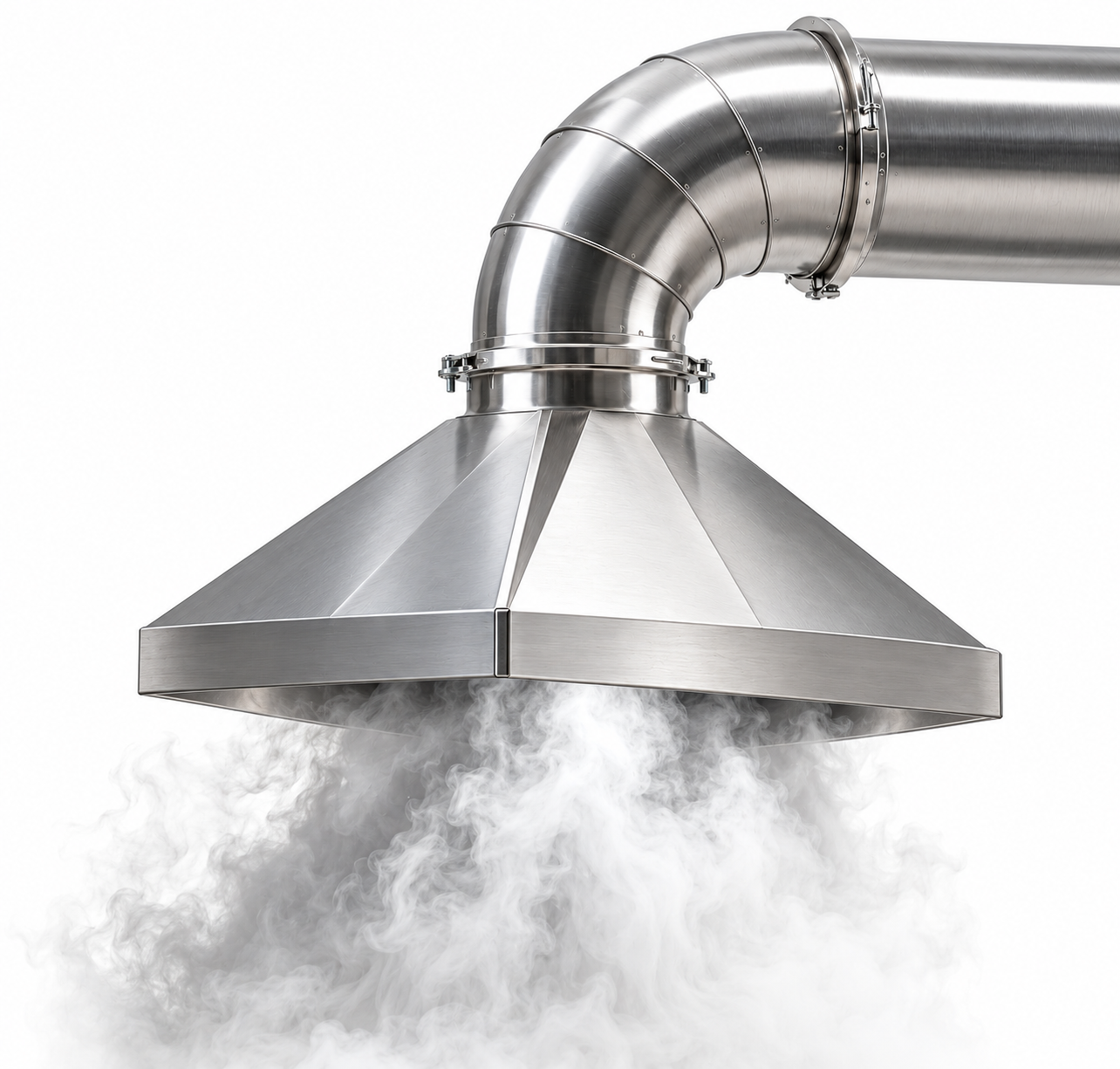
Capture & Ducting
Design hoods, machine adapters, branch ducts and dampers to capture dust at the right point.
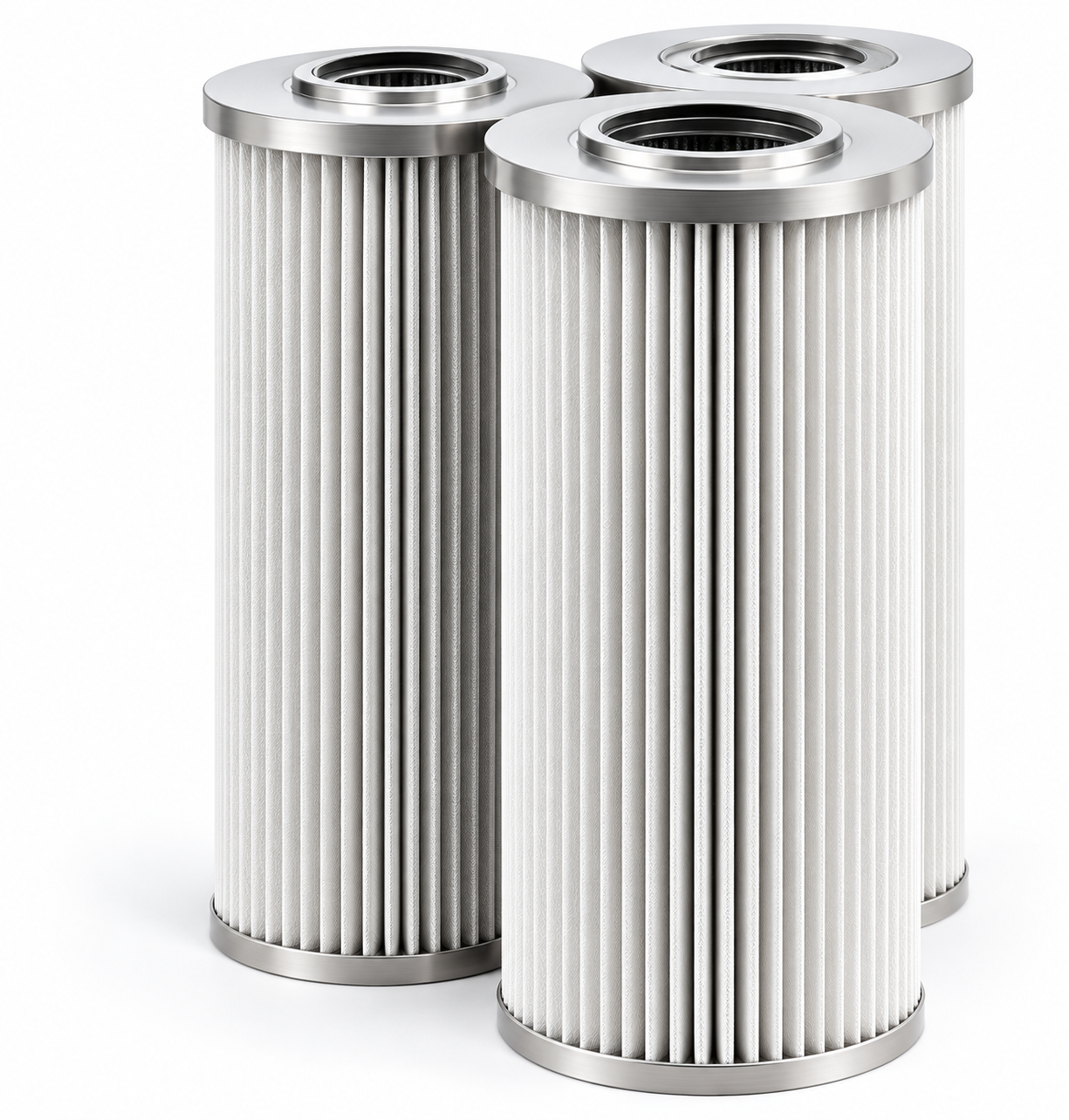
Filtration & Cleaning
Select suitable filter media, cleaning controls and access arrangements for the material and duty.
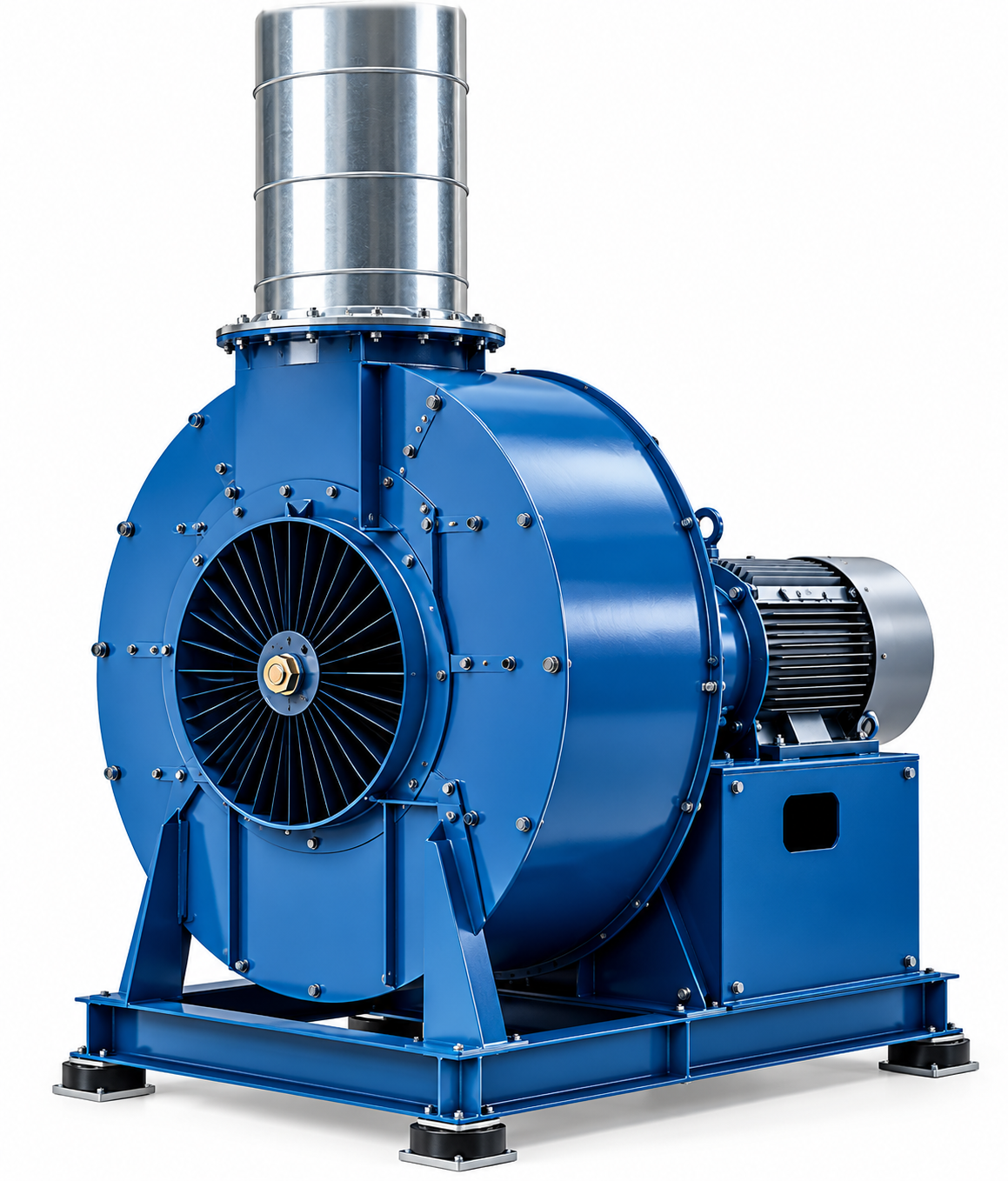
Fan & Controls
Size the fan for required air volume and total resistance, including VFD and control systems.
Dust Discharge
Specify collection bins, valves or conveyors around loading, handling and maintenance needs.
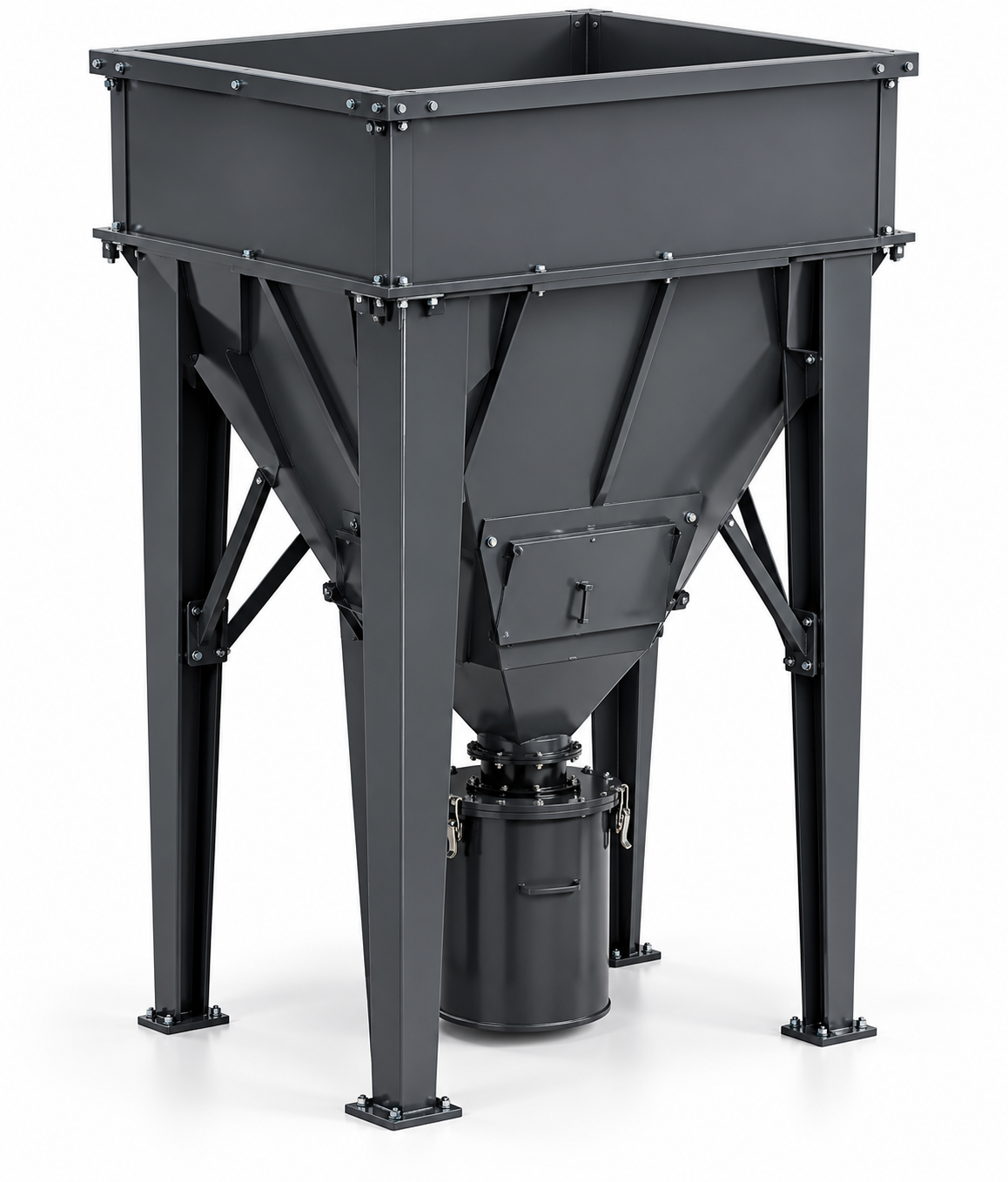
Eight inputs.
A stronger design basis.
Good information helps avoid an undersized collector, an unsuitable filter or an installation that is difficult to maintain.
Material
Identify the dust, coatings and contaminants. Note hazardous, reactive or combustible properties.
Particle behaviour
Describe size distribution, density, abrasion, moisture and any tendency to stick or agglomerate.
Capture points
List machines, hoods and connections, including which points operate at the same time.
Airflow & resistance
Share machine requirements and duct routes. Confirm the fan duty against total system resistance.
Temperature
Record normal and exceptional conditions, moisture and any risk of condensation.
Production duty
Include hours per day, loading variation, shift patterns and planned expansion.
Space & utilities
Define available height, footprint, service access, electricity and compressed-air supply.
Outlet & handling
Set the required outlet condition and how collected material will be contained and removed.
Benefits that depend on
good capture and upkeep.
Benefits depend on correct selection, installation and maintenance. Define the outcomes your process needs before specifying the equipment.

Reduce uncontrolled spread
Capture at the generation point can limit dust migration across a work area. Adequate containment and operator practices remain part of effective exposure control.
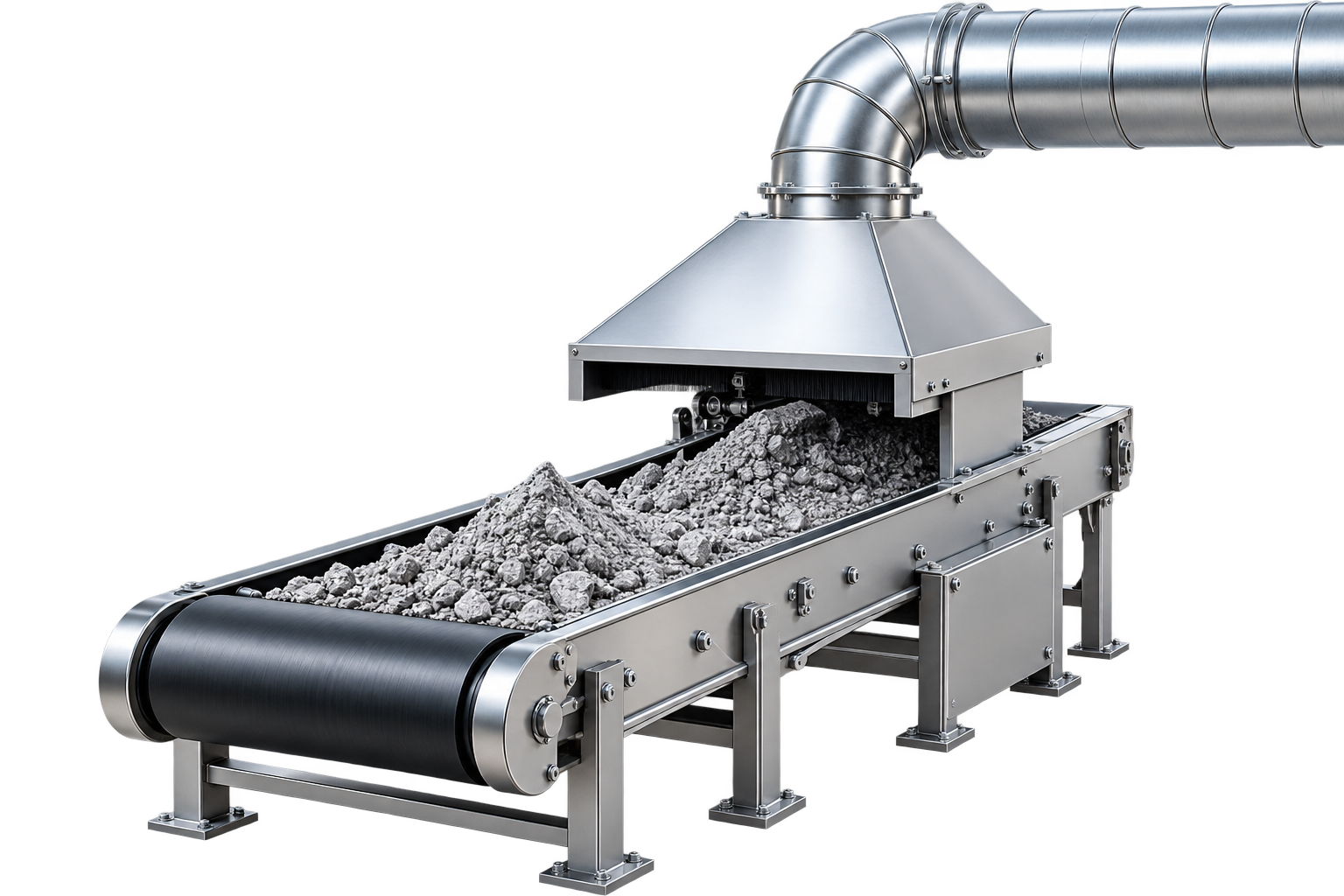
Manage process housekeeping
A planned collection and discharge route helps reduce uncontrolled deposits around compatible process equipment and makes routine removal more organized.

Evaluate material recovery
Some processes allow collected material to be recovered. Product quality, contamination, handling and reuse requirements determine whether recovery is appropriate.
Keep airflow visible.
Keep maintenance practical.
Inspection and servicing should follow the equipment instructions and process hazards. Trends are more useful than isolated readings.
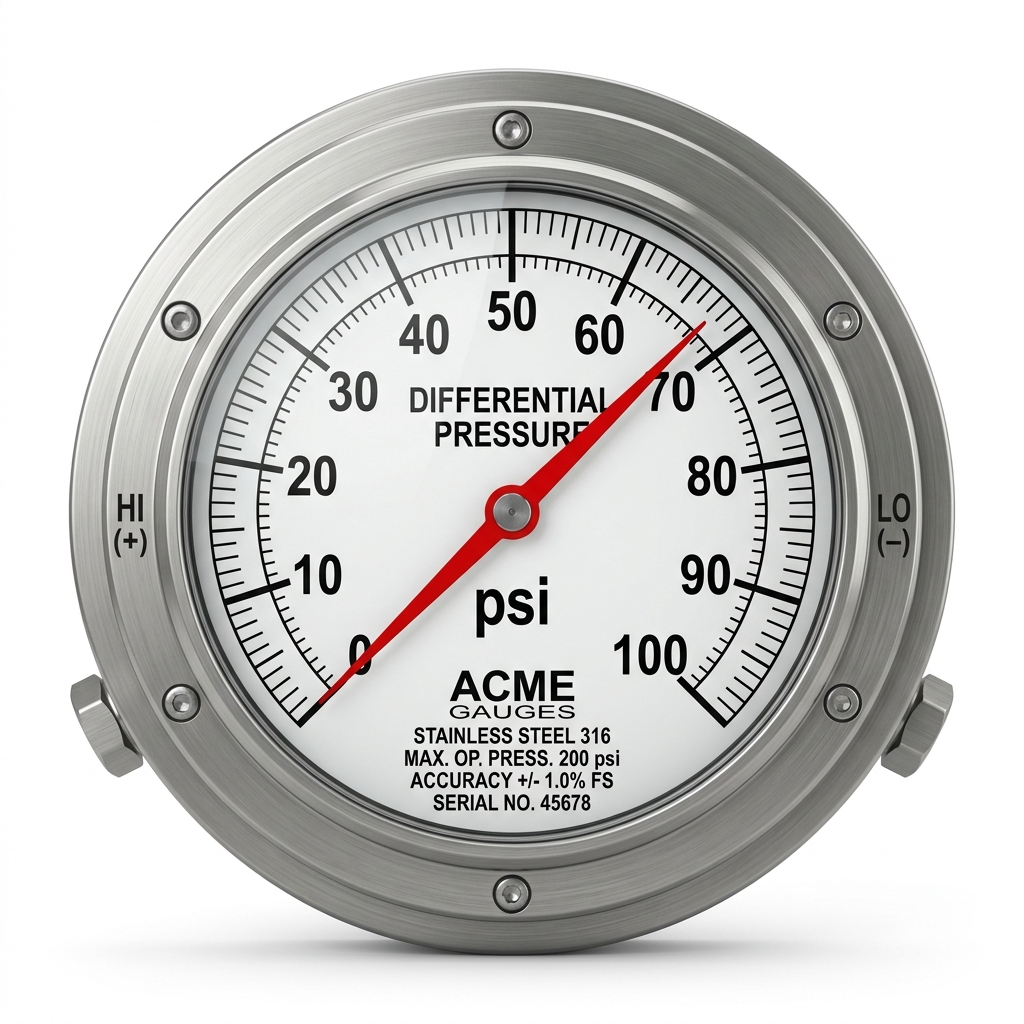
Watch differential pressure
Pressure across the filter helps describe resistance. Review trends together with airflow, cleaning operation and production conditions; pressure alone does not prove filter integrity.
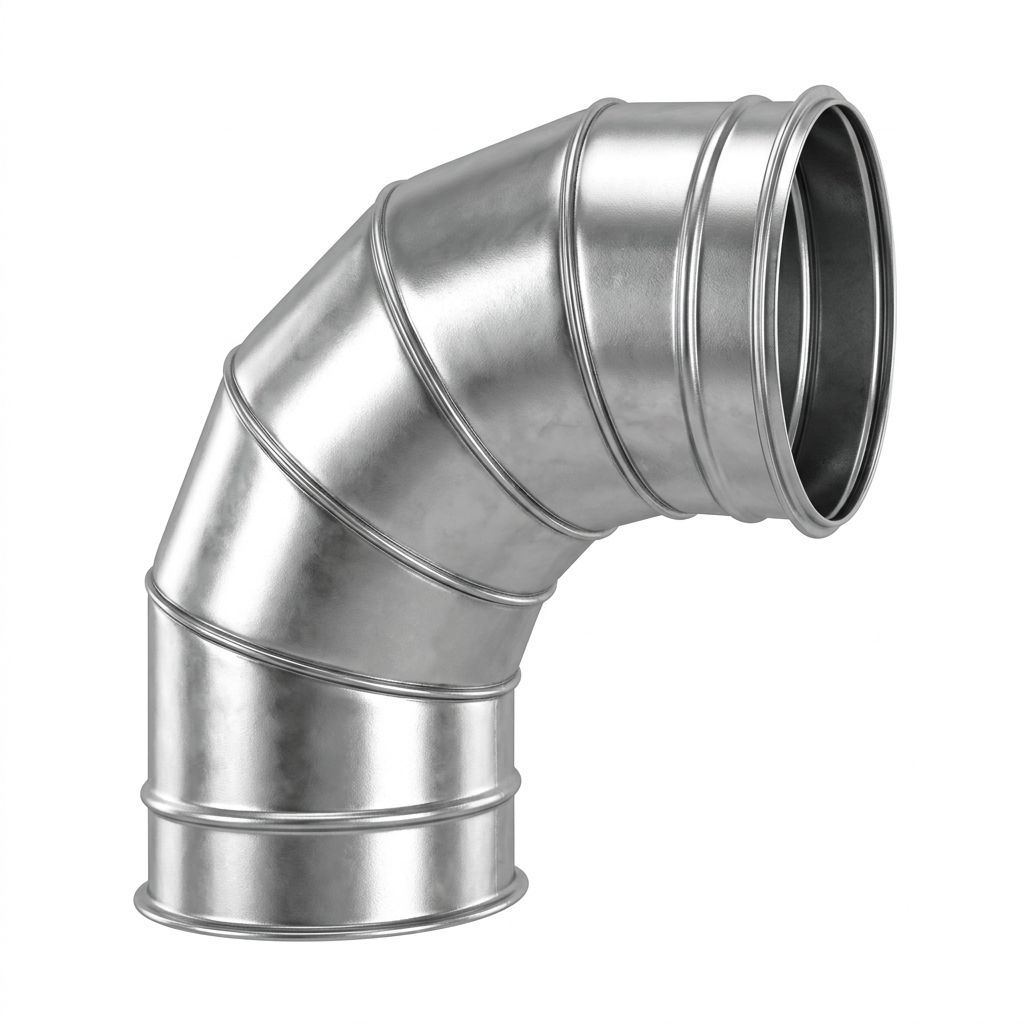
Check the extraction path
Inspect accessible hoods, ducts, joints and discharge points for leaks, buildup and damage. Poor capture may originate outside the collector housing.
Plan filter and dust handling
Provide safe maintenance access and appropriate containment for collected material. Select replacement filters against the original duty and equipment requirements.
Compare scope.
Then compare cost.
A dust collector quotation should explain the duty and equipment included. Two collectors with the same motor rating may have very different filtration area, airflow capability and installation requirements.
Ask for the design basis, collector configuration, fan duty, discharge arrangement and utilities. Separate equipment supply from ducting, installation and other site work so the comparison is meaningful.
Process and capacity
Airflow, loading, particle behaviour and continuous or intermittent operation influence equipment size.
Filtration and construction
Media, operating temperature, material compatibility and access arrangements affect the configuration.
System integration
Hoods, ductwork, fans, discharge devices and controls define the complete extraction scope.
Operating and maintenance costs
Electricity, compressed air, filter replacements, handling and servicing contribute to lifecycle cost.
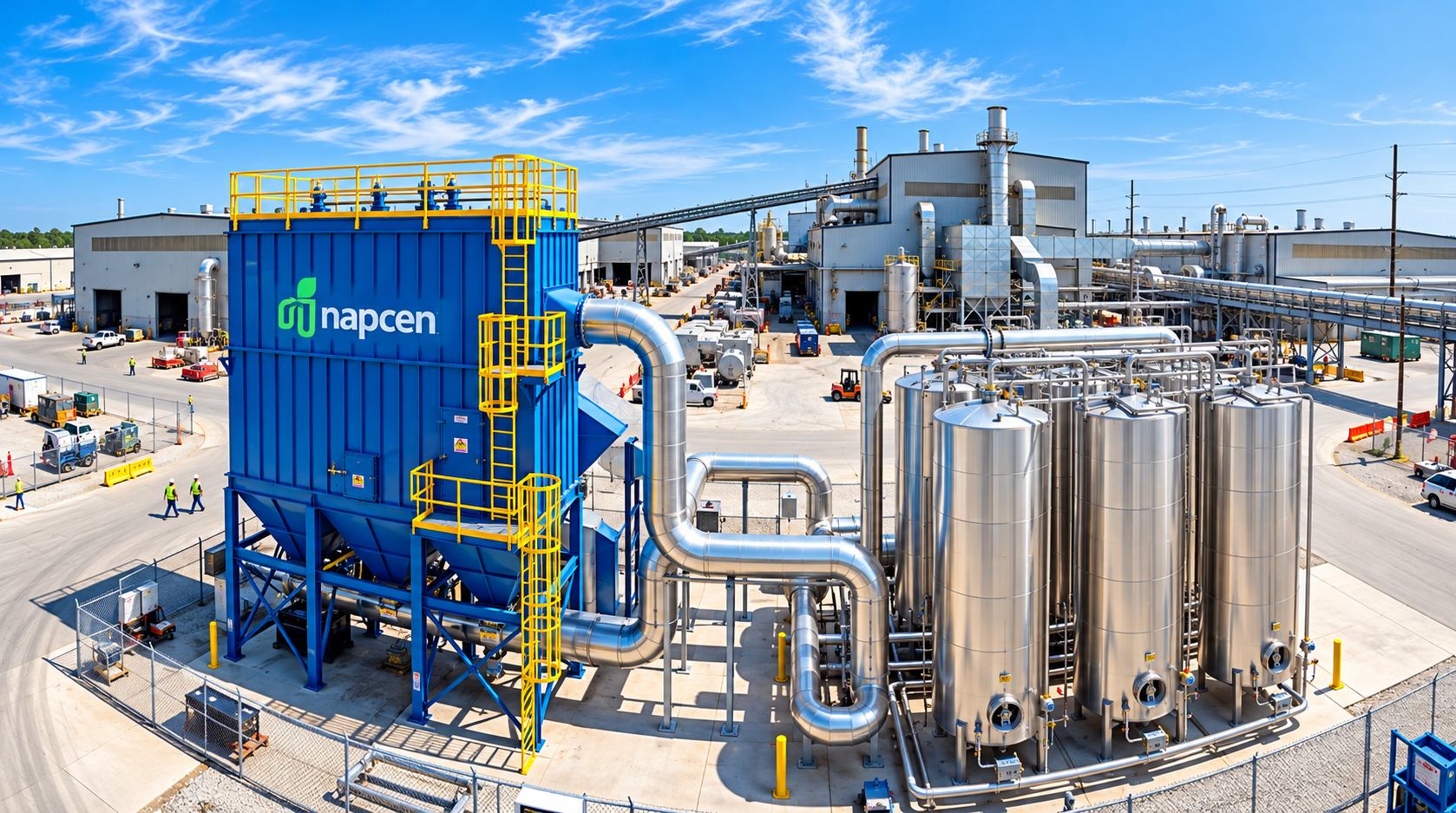
Understand the configuration.
Ask for the relevant evidence.
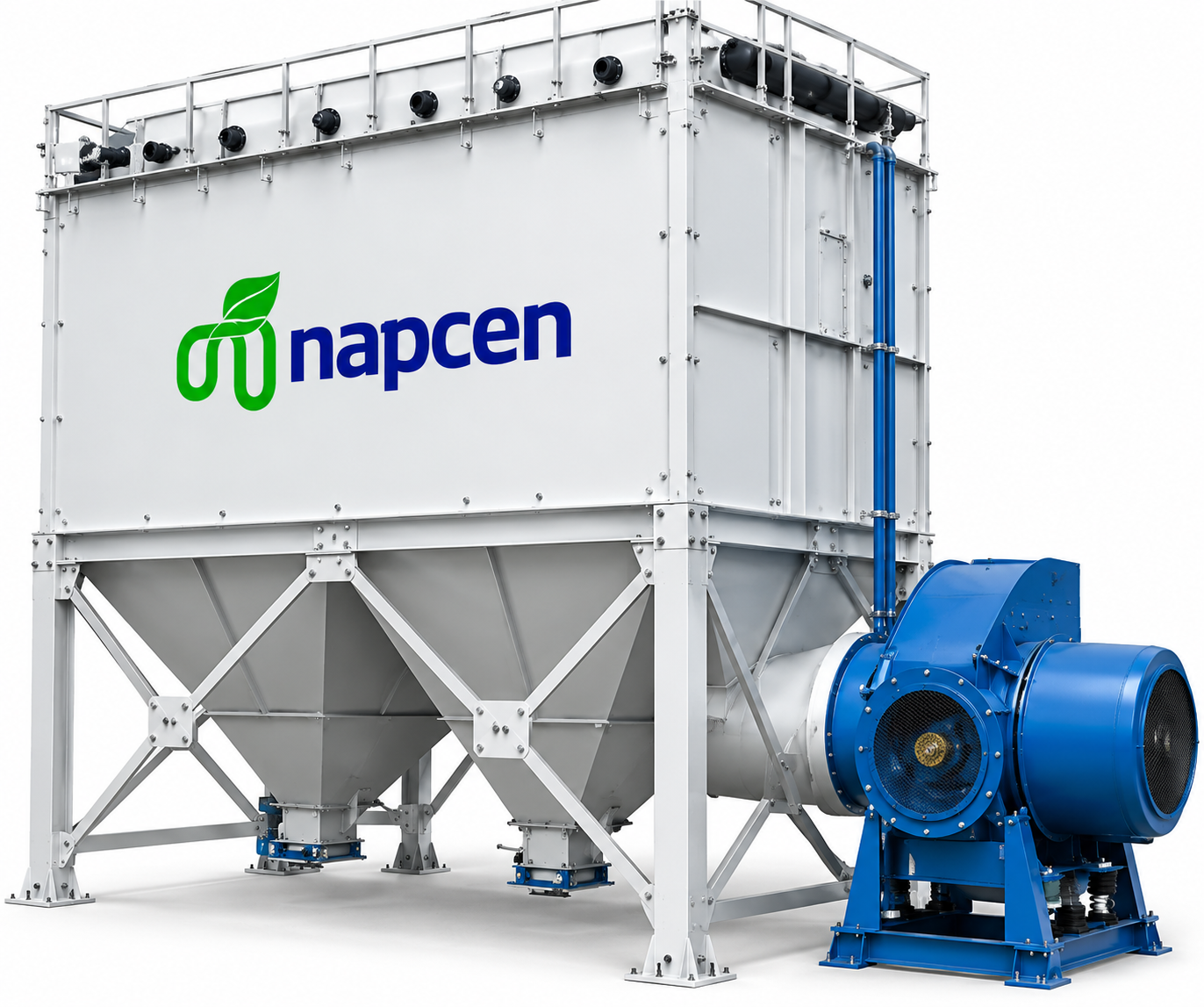
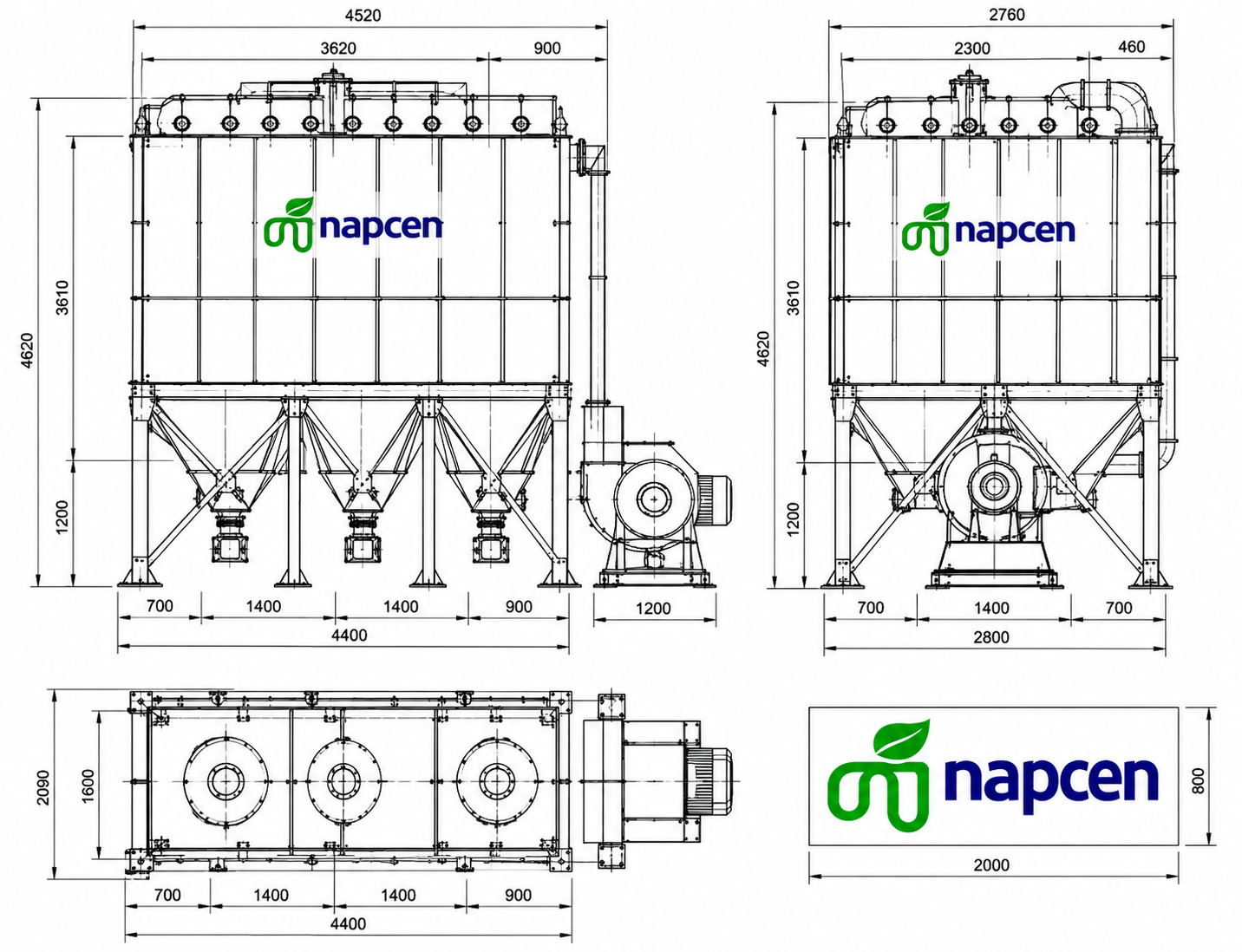
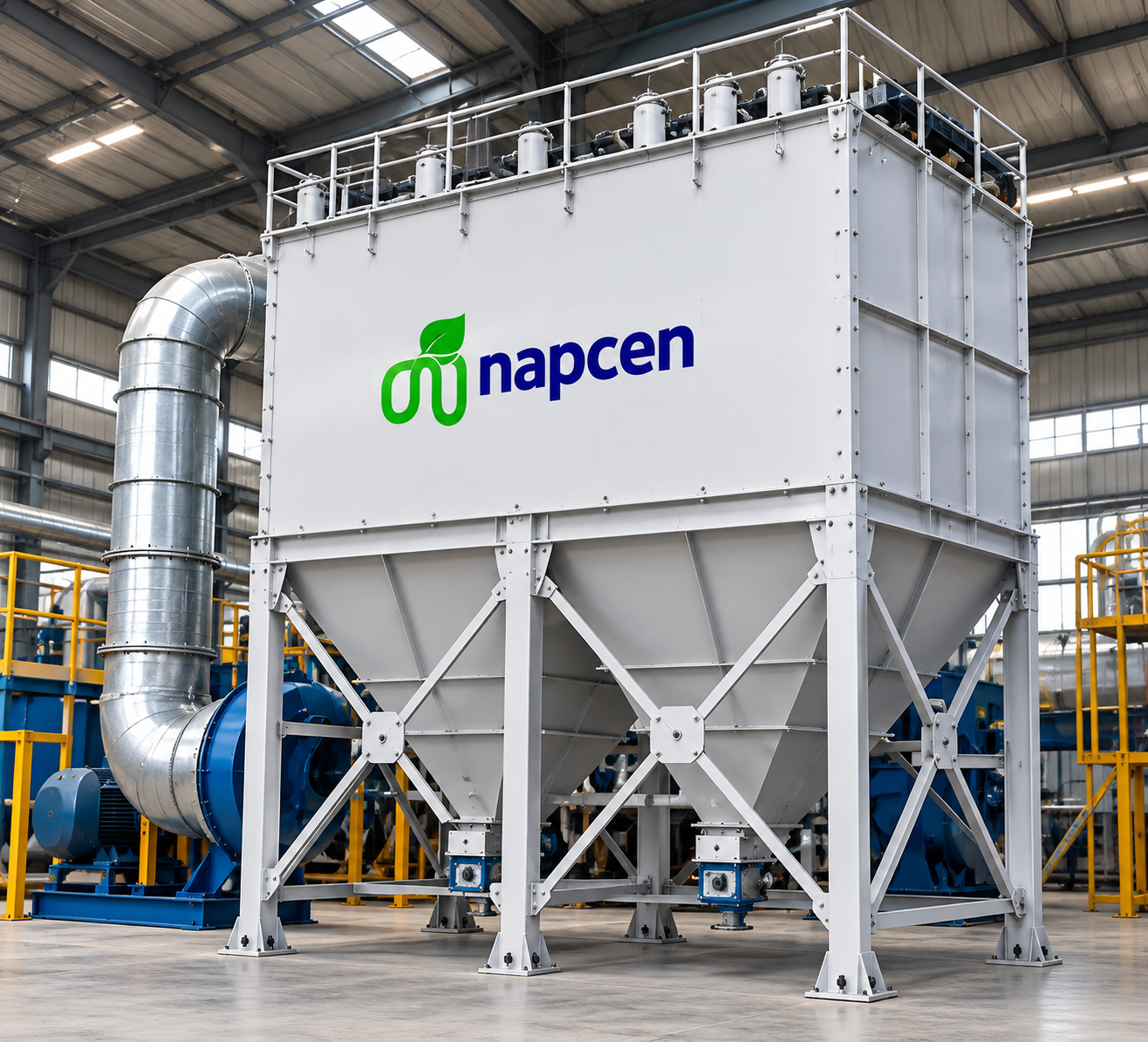
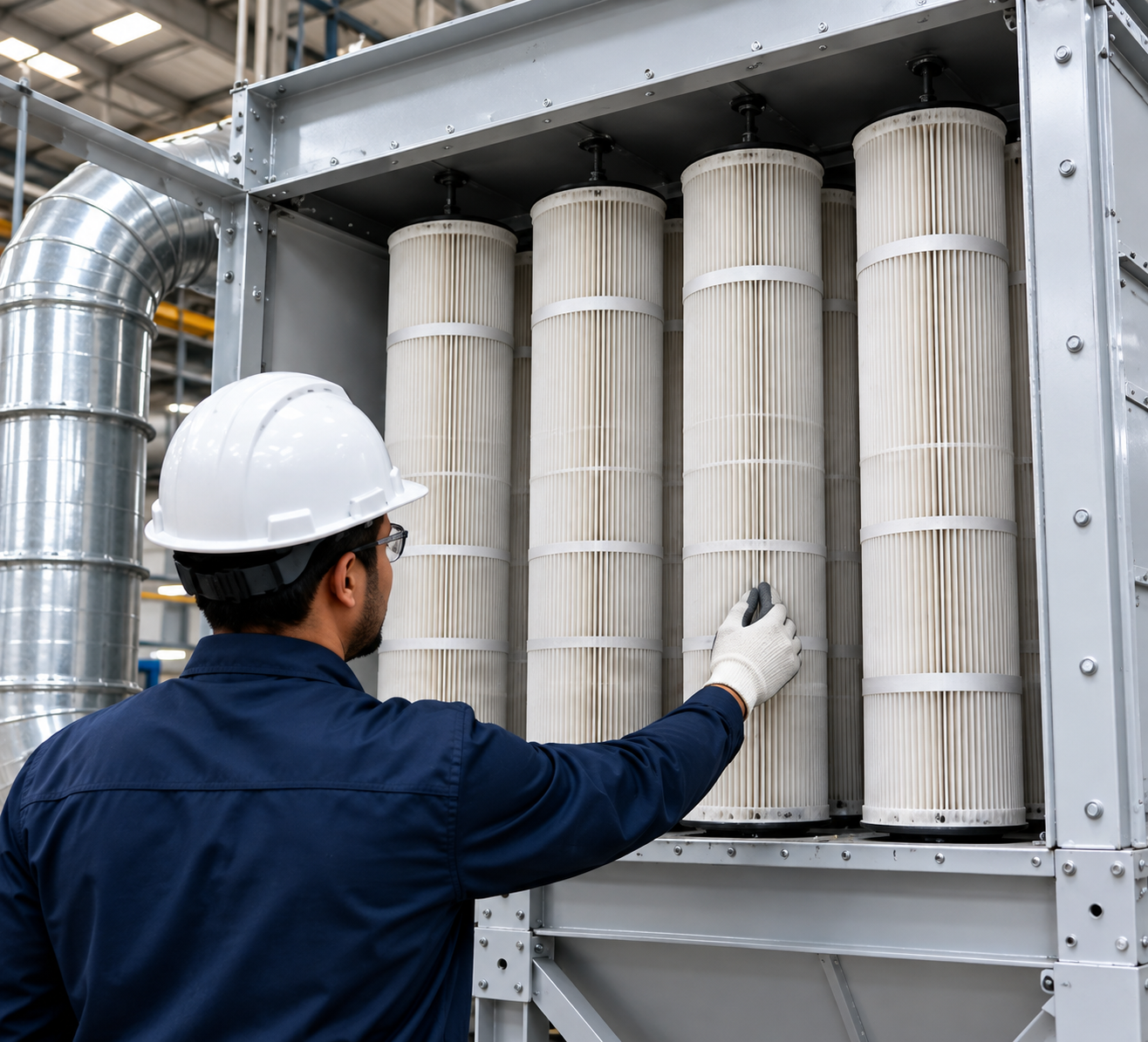
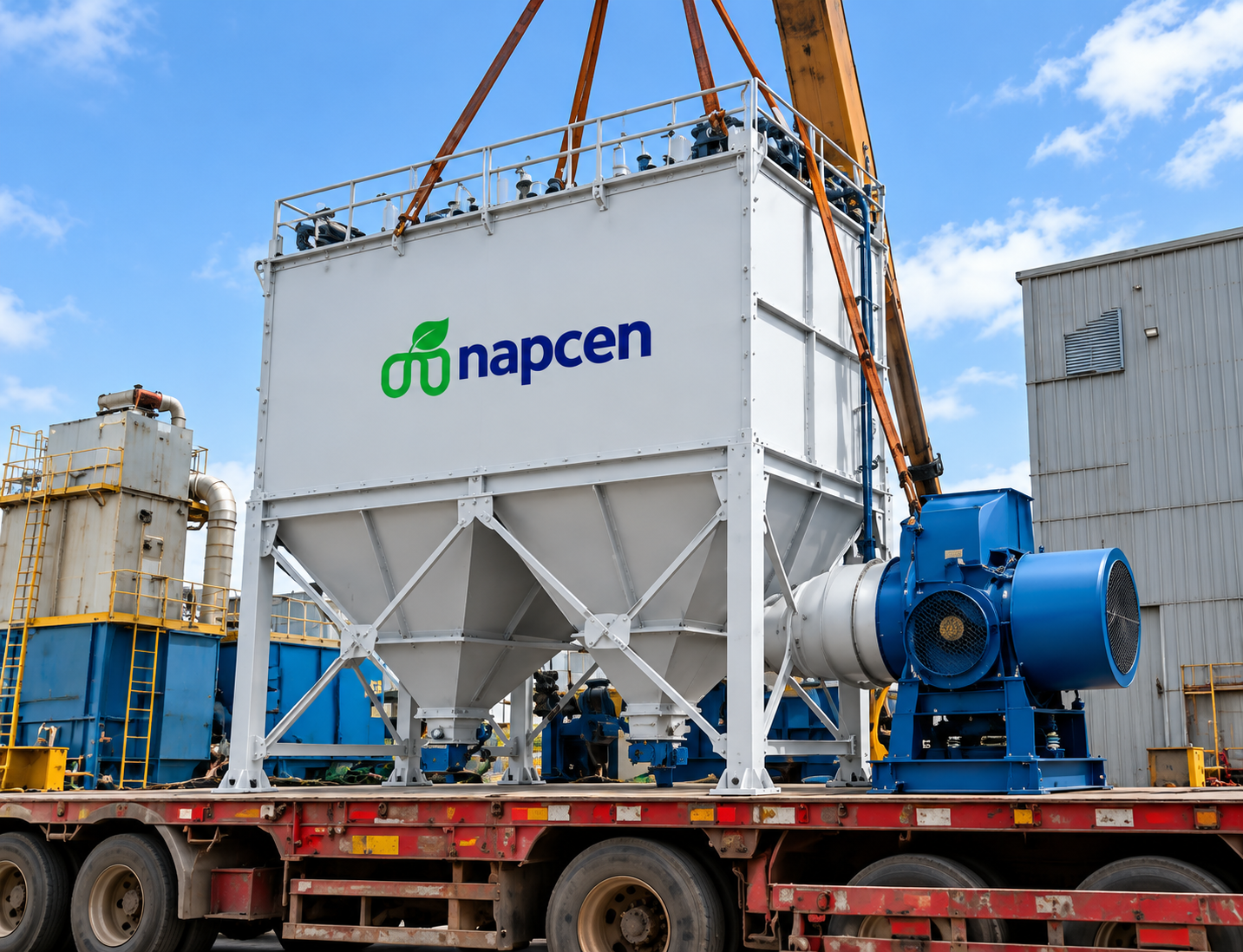
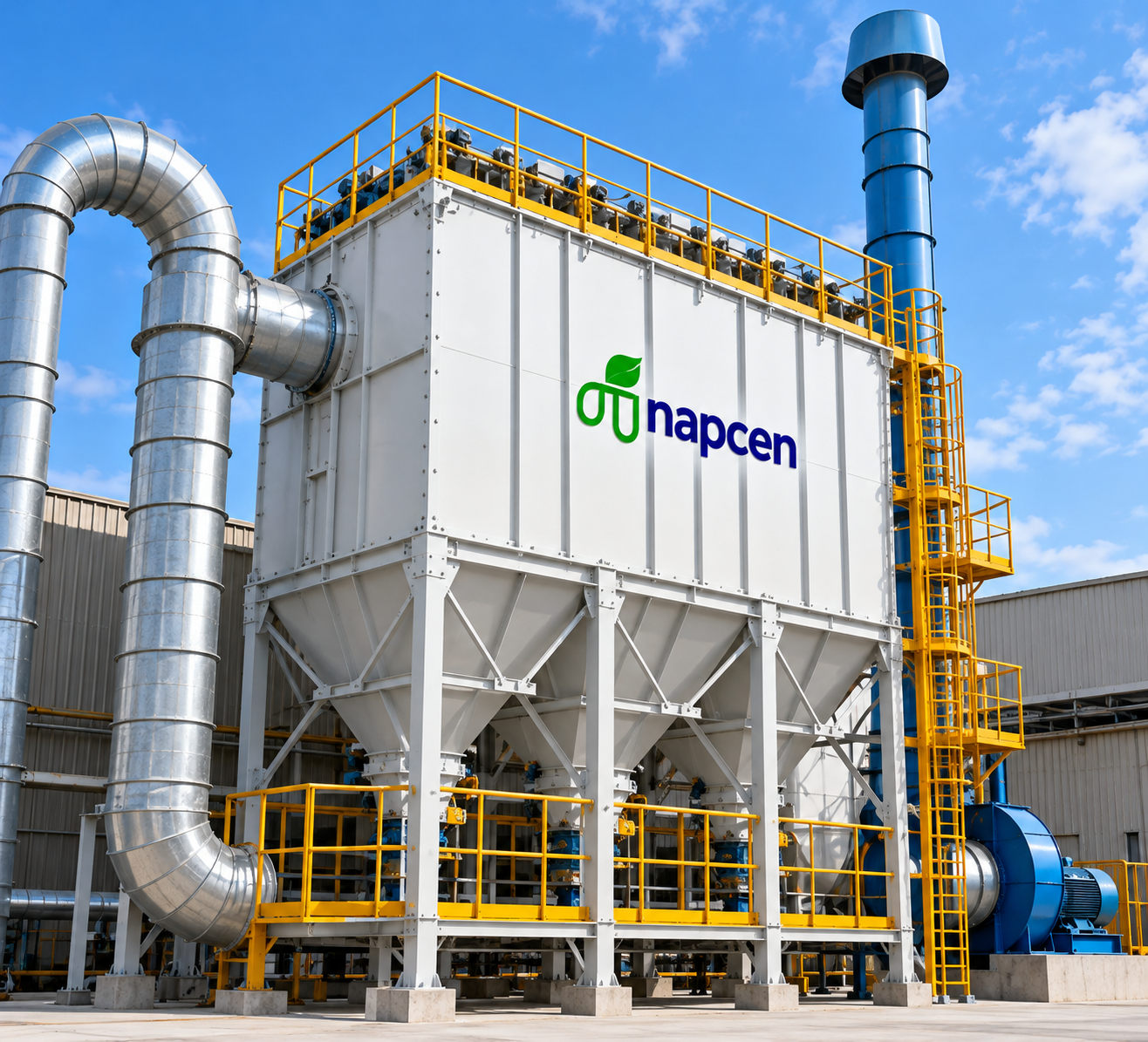
Explore NAPCEN equipment arrangements and the project details worth confirming before manufacture. These supplied renders illustrate equipment, not completed installations.
CONFIGURATION
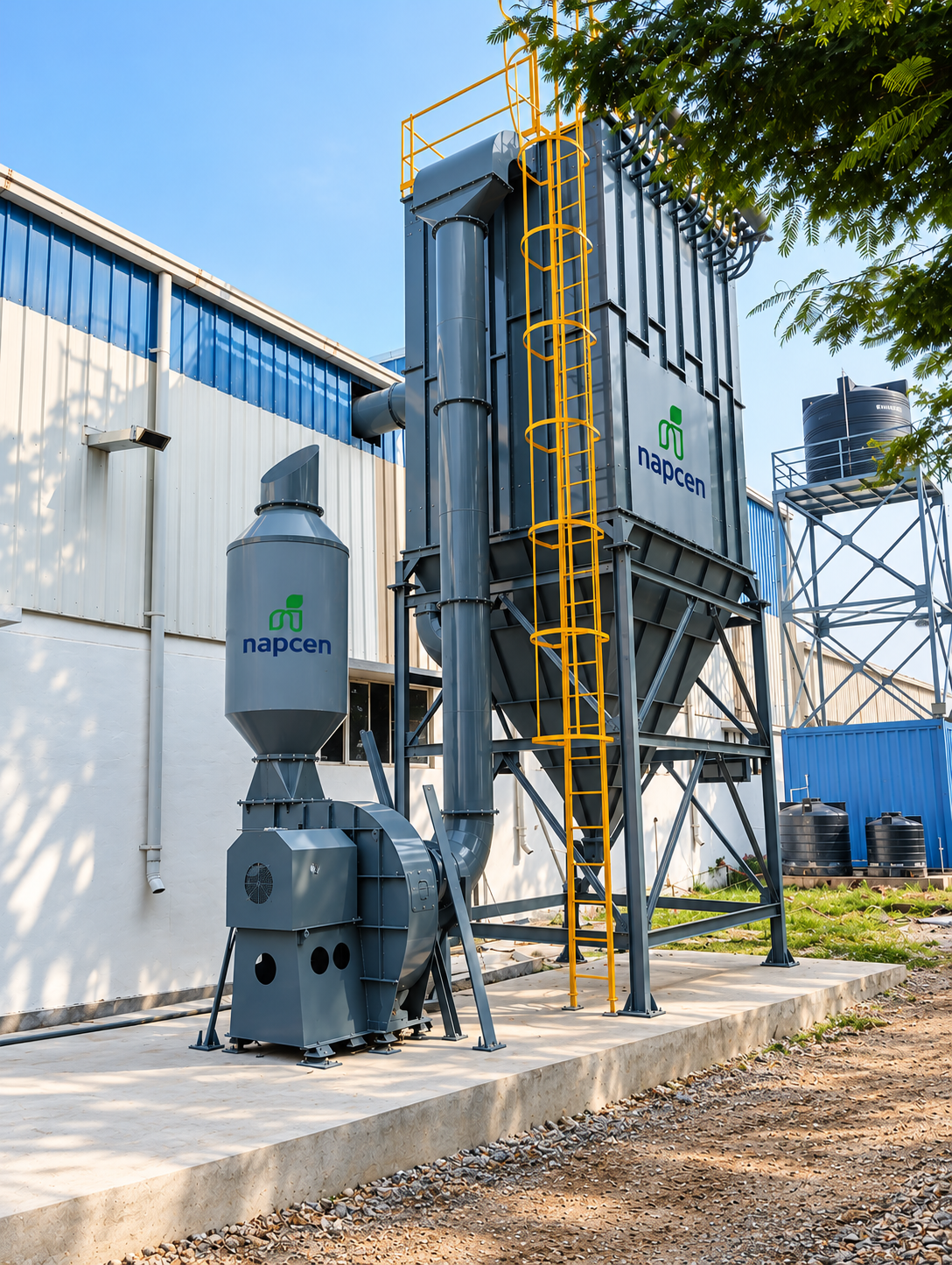
Access and discharge
Review filter access, platform requirements, structural support and the dust-removal route against your site layout.
points
structural support
arrangement
CONFIGURATION
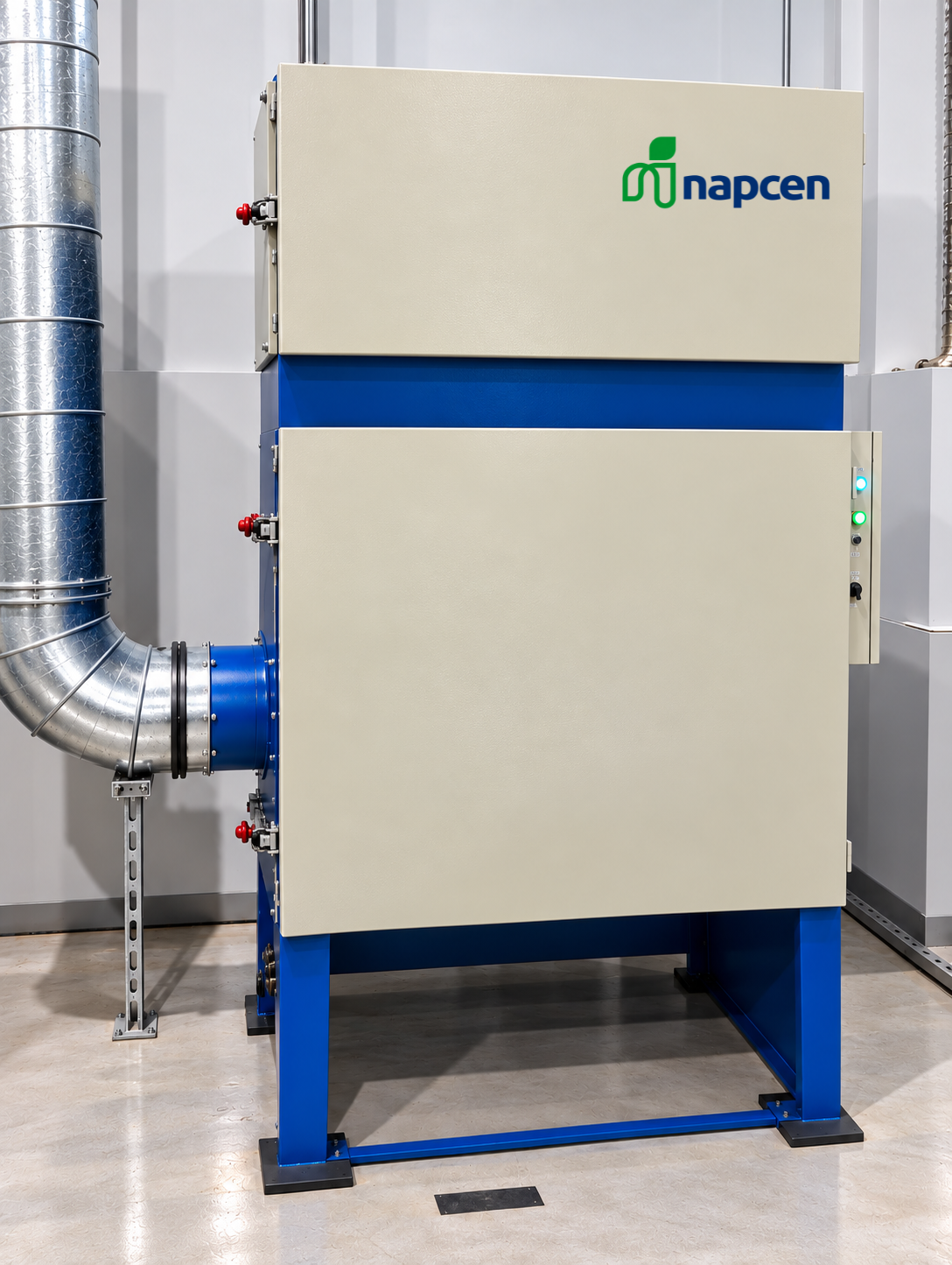
Compact service access
Confirm door clearance, filter replacement space and collection-bin movement before fixing the equipment position.
clearance
replacement
movement
CONFIGURATION
.png)
Collected-material handling
Consider particle recovery, container changes and any downstream filtration required for the process.
recovery
changes
filtration
Agree the checks before production.
For your order, define drawing approvals, material specifications, fabrication checks, dimensional inspection and the functional tests included in scope. Document maintenance clearances and connection points before site preparation.
Request a relevant project reference.
Ask for available installation photographs, the application and dust type, supplied equipment scope and any measured results with their test basis. Customer references and performance figures should be confirmed for the specific project.
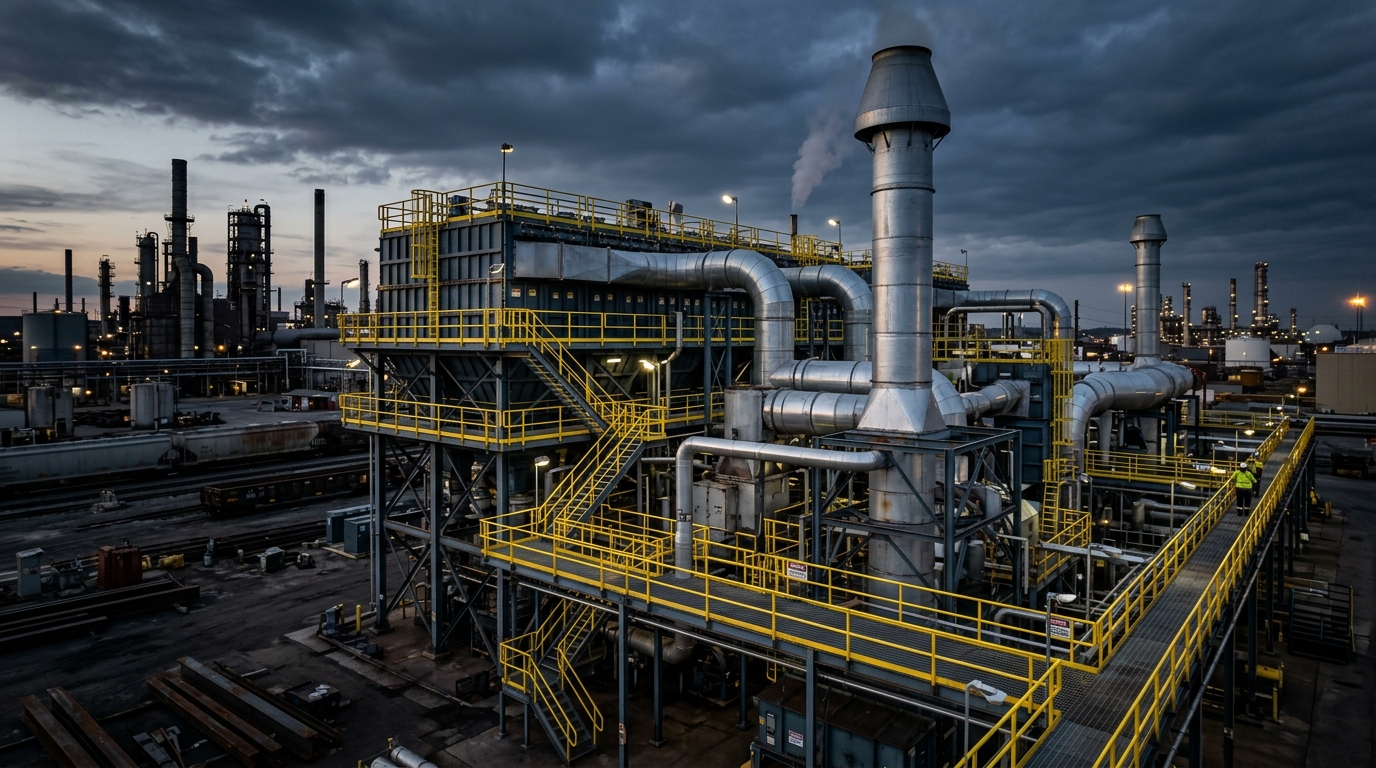
Support the installed system.
Keep replacements compatible.
Discuss service availability and the exact scope for your equipment and location.
A useful service enquiry identifies the machine, symptoms and operating conditions.
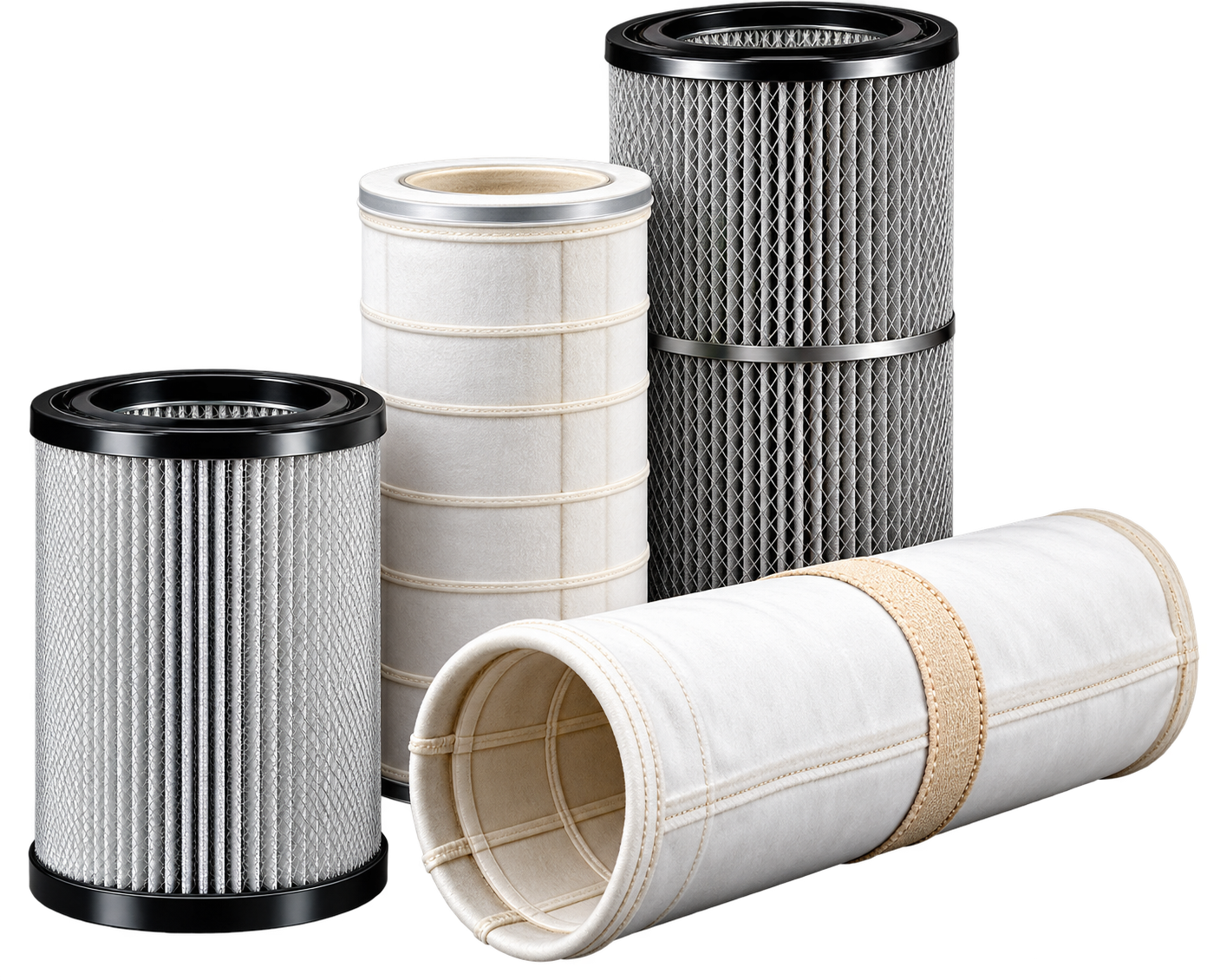
Replacement filters
Share collector model, filter dimensions, media specification and dust duty. Cartridge and bag selection should account for compatibility, sealing and cleaning arrangements.
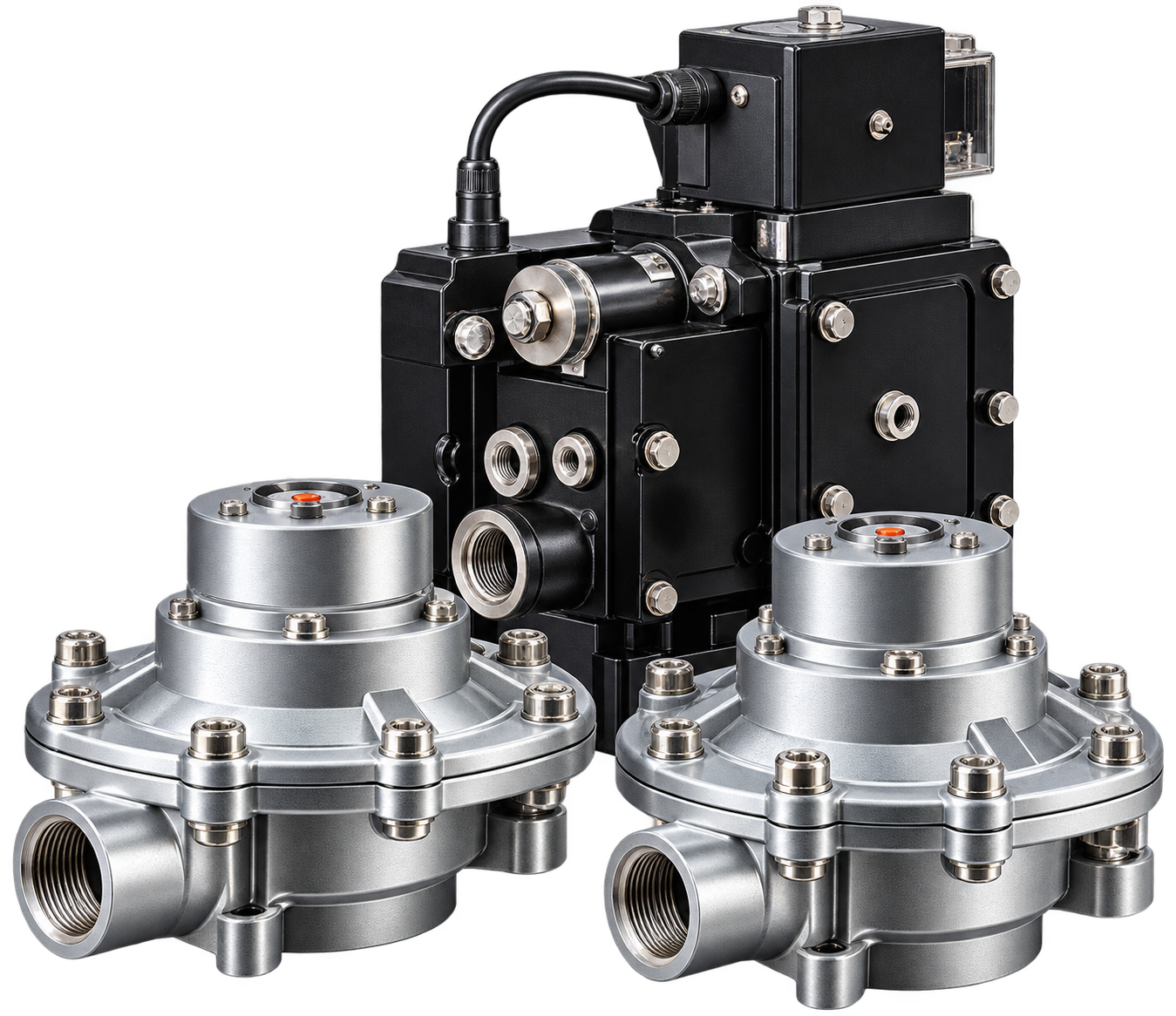
Cleaning-system components
For pulse valves, diaphragms or controllers, include part references and pneumatic/electrical details. Confirm component suitability before ordering replacements.
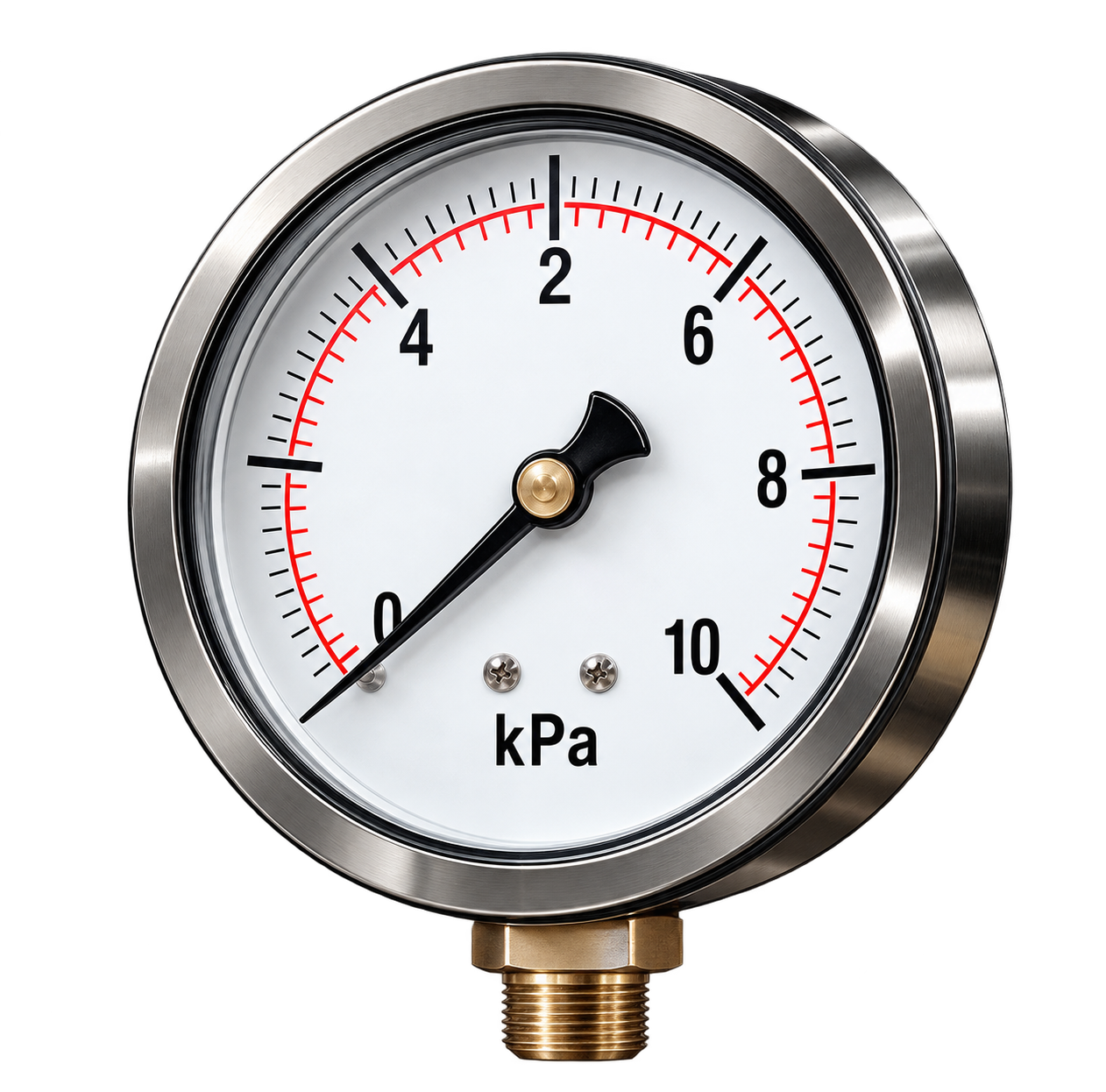
Inspection & troubleshooting
Describe weak suction, rising pressure, dust leakage or irregular discharge. Existing drawings, photographs and readings help define an inspection scope.
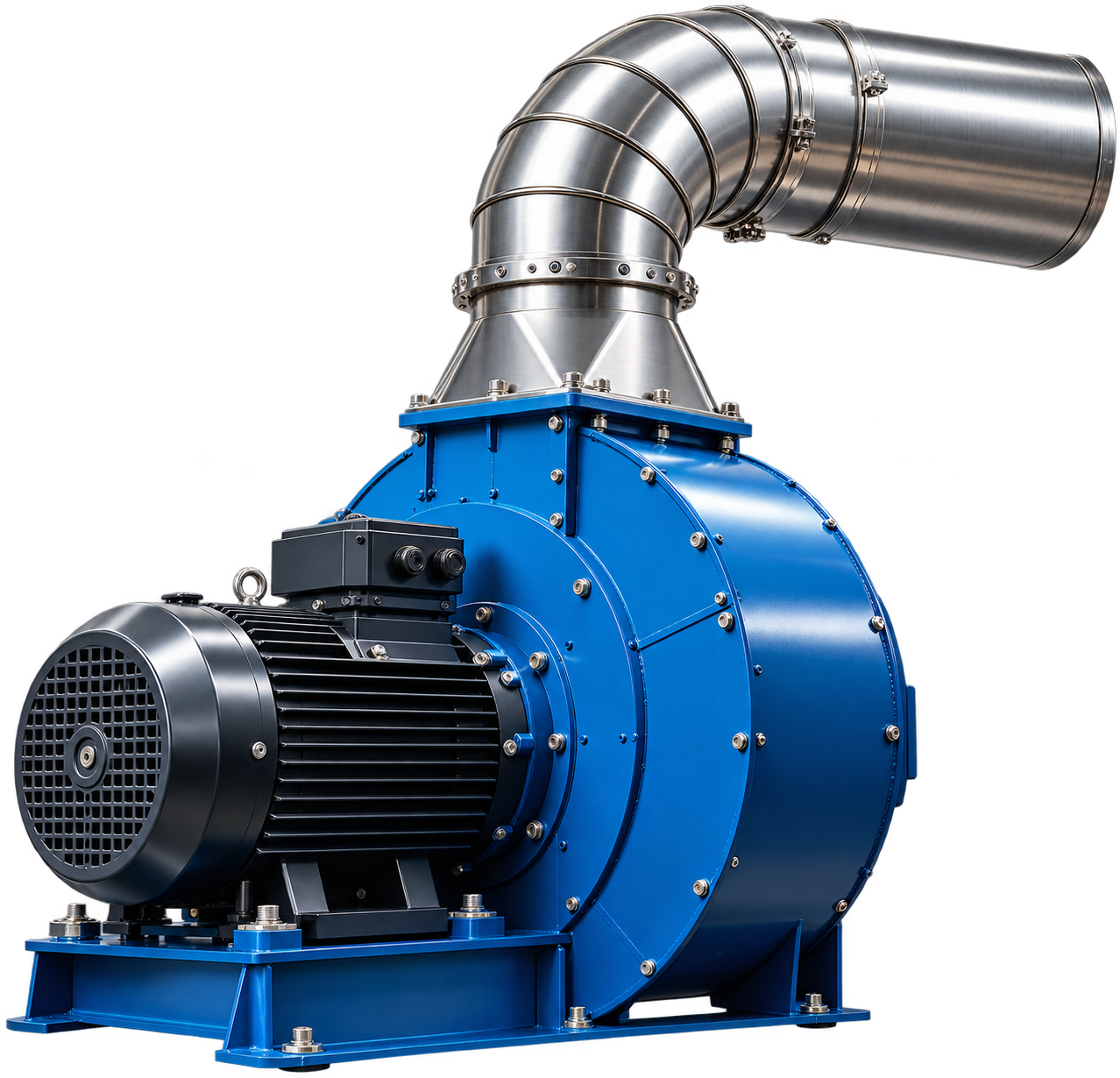
Retrofit & upgrade review
Discuss changes to media, pickup points, branch balance, fan controls or discharge. Establish why performance is poor before changing equipment.
Have an existing collector?
Include its nameplate, filter details and the issue you want to resolve.
Project workflow – Dust Collector
From dust control requirement to commissioning and ongoing support

Answers before
you specify.
Practical explanations for production teams, maintenance engineers and procurement buyers.
Need industrial air
pollution control equipment?
Start a technical discussion with NAPCEN engineers. We analyze your process to provide the most effective pollution control solution.
Puducherry, India - 605110
Request a quotation
Provide your process specifications, and our engineers will evaluate the requirements for a customized solution.
Get my quotationEnquiry data & privacy
Your enquiry details are submitted securely to NAPCEN's engineering team for prompt technical review and customized quotation. We do not sell or share your contact information with third parties. For direct communications, you can also reach us at info@napcen.com.